2026.03.26
 Industry News
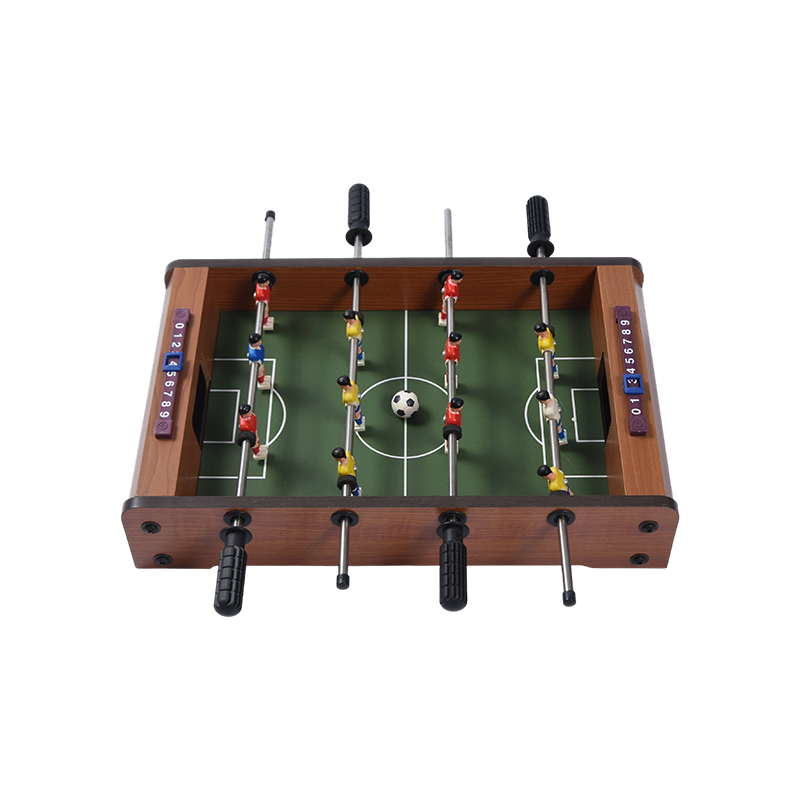
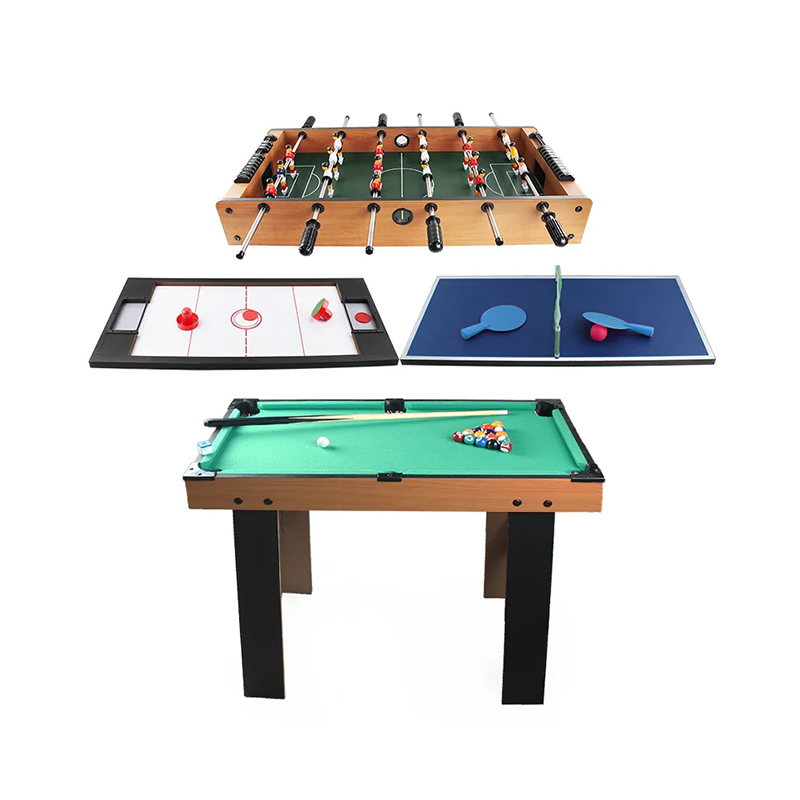
A wooden mini table football game delivers a compelling combination of developmental benefits, social value, durability, and space efficiency that plastic or electronic alternatives simply cannot match. Whether you are considering a wooden mini football table for a child's bedroom, a family living room, an office break room, or a travel bag, the case for the wooden version over other materials is strong — and backed by real differences in play quality, longevity, and the cognitive and social skills the game actively develops. This article breaks down every meaningful benefit so you can make an informed decision about whether this classic game belongs in your space.
Content
The material choice in a portable wooden foosball table is not merely aesthetic — it affects every aspect of the playing experience. Wood provides a combination of structural rigidity, natural weight distribution, and surface friction that directly improves how the game plays and how long it lasts.
A well-constructed wooden mini football table resists the flex and rocking that commonly affects lightweight plastic alternatives under fast rod movements. The natural density of wood — typically 0.4 to 0.9 g/cm³ for common hardwoods and MDF — gives the table a lower center of gravity and keeps it planted on the playing surface even during competitive, fast-paced play. Plastic tables in the same size category frequently need non-slip feet added to prevent sliding, while wood tables achieve stability through material weight alone.
The playing field of a small tabletop foosball game set made from wood or wood-composite provides a consistently flat, low-friction surface that allows predictable ball movement. Plastic field surfaces often develop micro-warping over time from temperature changes, creating uneven ball roll that degrades the quality of play. A sealed wooden field surface maintains its flatness and smoothness throughout the product's lifespan.
The sound of a goal scored on a wooden foosball table — the satisfying crack of the ball against the wooden backboard — is part of the game's sensory appeal that plastic cannot replicate. Research in game design consistently shows that audio-tactile feedback increases player engagement and perceived enjoyment. The natural resonance of wood amplifies these feedback cues without being excessively loud.
The mini table football game for kids is far more than a toy — it is an active developmental tool. Pediatric occupational therapists and child development researchers have identified several areas of meaningful cognitive and physical development supported by foosball-style games:
Operating the rods of a foosball table requires simultaneous tracking of a moving ball, rapid adjustment of rod position, and precise rotational control of the player figures — all demanding real-time coordination between visual input and manual response. Studies in pediatric motor development suggest that games requiring bimanual coordination (using both hands for different tasks simultaneously) accelerate fine motor skill development in children aged 4–10 by providing engaging, repetitive practice in a self-motivating context. A wooden mini football table provides this training naturally, without any educational framing required.
Even at the mini scale, foosball requires players to read the position of opponent players, anticipate ball trajectories, and plan attacking moves while defending simultaneously. This multi-variable, real-time decision-making builds the same spatial reasoning and anticipatory thinking skills that benefit performance in mathematics, engineering disciplines, and team sports. Children who regularly engage in strategy-demanding tabletop games show measurably stronger performance in spatial reasoning tasks in multiple longitudinal studies.
Winning and losing in a fast-paced game like foosball provides repeated, low-stakes practice in managing competitive emotions — frustration at conceding a goal, excitement at scoring, and the discipline to stay focused after setbacks. Child psychologists note that structured play with clear win/lose outcomes is one of the most effective environments for developing emotional regulation in children aged 5 and older, particularly when the game is played face-to-face with a parent or peer rather than against a screen.
One of the most consistent findings in child and family psychology over the past decade is that face-to-face play between family members and peers produces social and emotional benefits that screen-based entertainment cannot replicate. A wooden mini football table is inherently a multiplayer, in-person experience — it requires two players physically present at the same table, maintaining eye contact, reacting to each other's moves in real time, and sharing the emotional experience of competition.
Key social benefits observed in regular foosball play include:
A full-size foosball table occupies approximately 56 × 30 inches (142 × 76 cm) of floor space and weighs between 50 and 100 kg — suitable for a dedicated games room but impractical for most living spaces, classrooms, or offices. A portable wooden foosball table in mini format typically measures between 16 × 9 inches and 24 × 14 inches, weighs 1.5 to 4 kg, and can be stored in a cupboard, packed in a travel bag, or placed on any table surface when in use.
This size-to-play-quality ratio makes the wooden mini format the practical choice for:
| Feature | Wooden Mini Football Table | Plastic Mini Football Table |
|---|---|---|
| Table Stability | High (natural weight) | Low–Moderate (slides easily) |
| Playing Surface Flatness | Consistent long-term | May warp with temperature changes |
| Durability / Lifespan | 5–10+ years with basic care | 1–3 years typical |
| Aesthetic Appeal | High (natural material look) | Moderate (varies by finish) |
| Environmental Impact | Lower (renewable, biodegradable) | Higher (petroleum-based) |
| Play Feel and Sound | Natural resonance, satisfying feedback | Hollow, lower-quality sound |
| Gift / Display Value | High | Low–Moderate |
A key advantage of a well-made wooden mini football table is its service life relative to plastic alternatives. The chart below illustrates expected product lifespan under regular use conditions — a critical factor when evaluating the long-term value of any game purchase.
Figure 1: Comparative expected lifespan of foosball table types under regular household use (illustrative estimate)
A quality portable wooden foosball table maintained with basic care — keeping it dry, cleaning the rods occasionally, and storing it flat when not in use — can realistically remain in excellent playing condition for 5 to 10 years of regular family use. This multi-year service life means the game outlasts multiple rounds of children's developmental stages, making it a single purchase that grows with a family rather than needing periodic replacement.
Wood is a renewable, biodegradable material with a significantly lower lifecycle environmental impact than petroleum-based plastics. When sourced from responsibly managed forests — look for FSC certification on wooden game products — a wooden mini football table represents a material choice with genuine environmental credentials. At end of life, a wooden table can be composted or biodegraded, unlike plastic components which persist in landfill for hundreds of years.
A mini table football game for kids made from natural wood finished with non-toxic paints and sealants presents a lower chemical exposure risk than plastic alternatives that may contain BPA, phthalates, or other plasticizers. When selecting a wooden foosball game for young children, verify that the product complies with toy safety standards relevant to your region — EN 71 in the European Union, or ASTM F963 in the United States — which cover both material safety and mechanical hazards such as small parts and rod end caps.
A wooden foosball table operates entirely through physical interaction — no power source, no batteries, no connectivity required. This makes it functional in any location, free from the setup and maintenance demands of electronic games, and free from the screen time concerns that now frame so much of childhood entertainment. Many pediatric and educational organizations recommend physical, face-to-face games specifically as a counterbalance to screen-based entertainment, and the small tabletop foosball game set fits this recommendation precisely.
One of the strengths of the wooden mini football table as a family game is its broad usable age range. Unlike many children's games that are outgrown within a year or two, foosball scales in challenge with skill development:
| Age Range | Developmental Focus | Recommended Play Style |
|---|---|---|
| 3–5 years | Motor skills, cause-and-effect | Free play, adult-assisted |
| 6–9 years | Coordination, basic strategy, rules | 1v1 with peers or parents |
| 10–14 years | Tactical thinking, competitive play | Competitive matches, small tournaments |
| 15+ / Adults | Advanced technique, social play | Social games, office play, family competition |

A professional enterprise specializing in the production of game gift products, with complete testing equipment and strong technical force.
Read MoreCONTACT US
For exclusive deals and latest offers, sign up by entering your email address below.
ORGANAIZATION INFO
Address: No. 329, Fangyan Road, Luotuo Street, Zhenhai District, Ningbo City, Zhejiang Province, China.
Phone:+86 15990507778
E-mail:[email protected]
Copyright © Ningbo Royal Import And Export Co., Ltd. All Rights Reserved. China Game Product Sets Manufacturers Wholesale Game Gift Products Factory privacy



 English
 Español
 Deutsch