2026.03.19
 Industry News
Reading tarot cards as a beginner starts with one practical step: learn the structure of the deck before memorizing individual card meanings. A standard tarot deck contains 78 cards divided into the Major Arcana (22 cards representing major life themes) and the Minor Arcana (56 cards covering everyday situations across four suits). Once you understand this framework, you can begin drawing single cards daily, build familiarity with imagery and symbolism, and gradually develop your own interpretive voice. Most experienced readers agree that consistent daily practice over 30–90 days builds more genuine fluency than attempting to memorize all 78 meanings at once. This guide walks you through everything a beginner needs to start reading confidently and meaningfully.
Content
Before you draw a single card, understanding how the deck is organized will make every reading more coherent. The 78-card tarot deck is not random — it follows a deliberate symbolic architecture that gives context to every card you encounter.
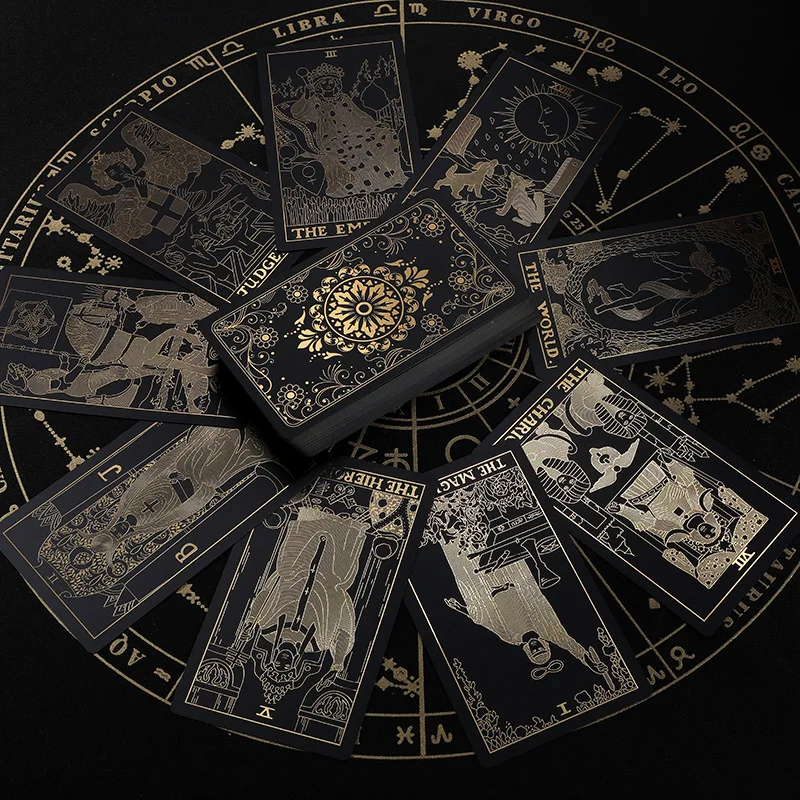
The Major Arcana runs from card 0 (The Fool) to card 21 (The World) and represents significant life forces, spiritual lessons, and archetypal themes. When a Major Arcana card appears in a reading, it typically signals that the situation carries significant weight or long-term importance. A spread dominated by Major Arcana cards often points to a period of major transition or meaningful personal development.
| Card Number | Card Name | Core Theme |
|---|---|---|
| 0 | The Fool | New beginnings, spontaneity, leaps of faith |
| 1 | The Magician | Willpower, skill, manifestation |
| 2 | The High Priestess | Intuition, inner knowing, mystery |
| 7 | The Chariot | Determination, control, victory through effort |
| 10 | Wheel of Fortune | Change, cycles, turning points |
| 13 | Death | Endings, transformation, releasing the old |
| 17 | The Star | Hope, renewal, inspiration after difficulty |
| 21 | The World | Completion, integration, fulfillment |
The Minor Arcana is divided into four suits of 14 cards each — Wands, Cups, Swords, and Pentacles. Each suit contains numbered cards (Ace through 10) and four court cards (Page, Knight, Queen, King). Understanding each suit's domain makes Minor Arcana cards immediately more intuitive:
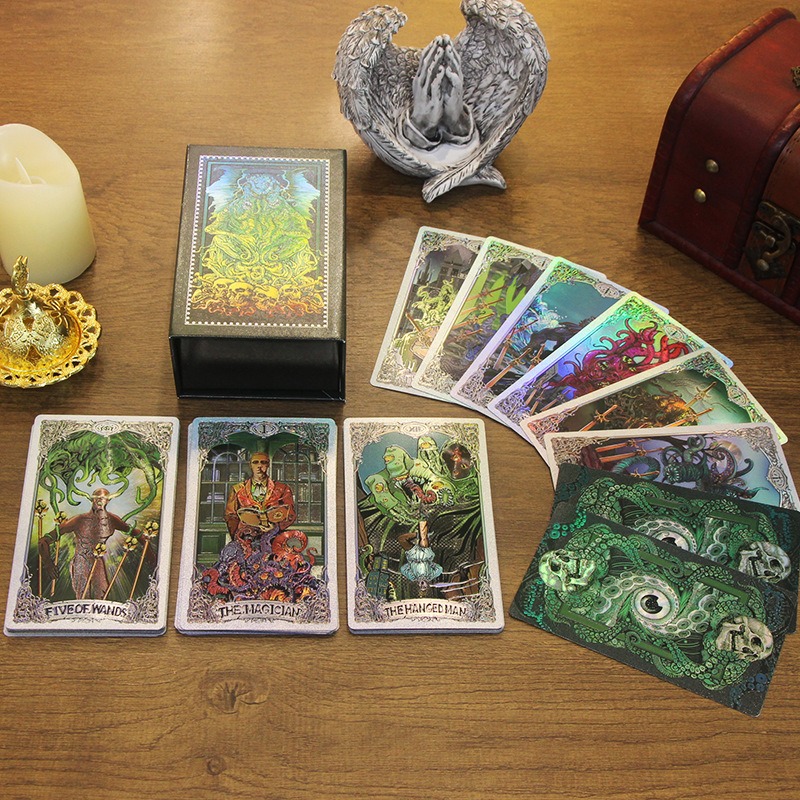
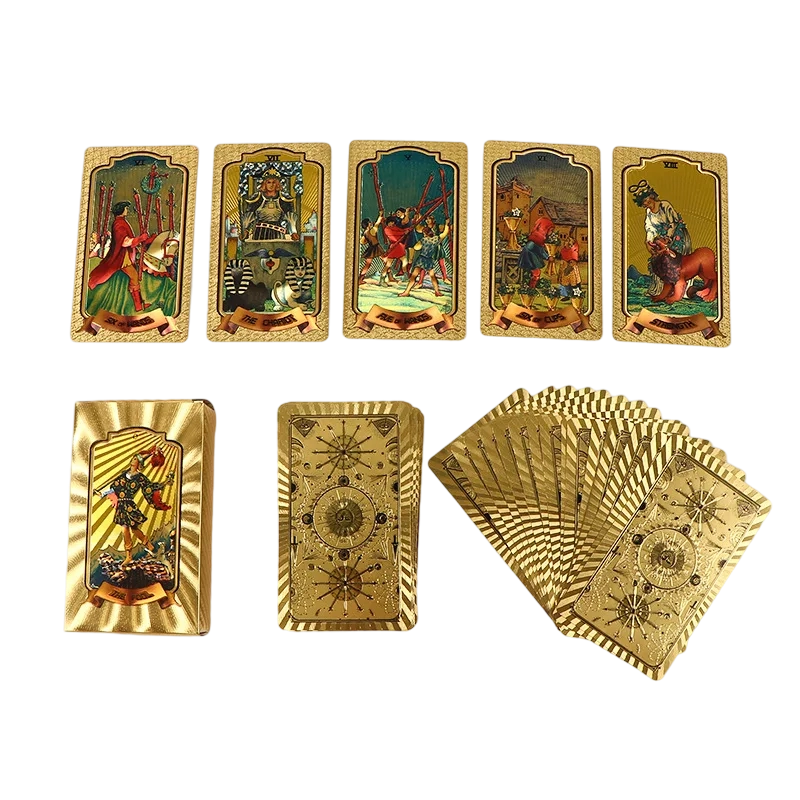
For a tarot cards for beginners guide, the most practical advice on deck selection is this: choose a deck with illustrated scenes on every card — not just symbols — because the imagery carries the meaning and supports intuitive reading before you have memorized the textbook definitions.
The Rider-Waite-Smith tradition (first published 1909) established fully illustrated scenes on all 78 cards and remains the foundational reference for most tarot literature and learning resources. Any deck described as "Rider-Waite-based" or "RWS-inspired" follows this illustrated format and is well-supported by written guides, online resources, and courses — a significant practical advantage when learning.
There is no single correct way to shuffle tarot cards, but there are several widely used methods that serve different practical purposes. The most important principle is that shuffling is also a focusing ritual — it gives your mind time to settle on the question or intention behind the reading.
Before drawing, spend 15–30 seconds focusing on a specific, open-ended question or theme. Avoid yes/no questions in the early stages of learning — they reduce the reading to a binary and prevent you from developing interpretive depth. Instead of "Will I get the job?", ask "What do I need to understand about this career opportunity?" This framing invites narrative rather than prediction and helps beginners engage meaningfully with whatever card appears.
Spreads are the layouts used to give each card position a defined meaning. For beginners, starting with small spreads and building gradually is significantly more effective than attempting complex 10-card layouts before card meanings are internalized. The following tarot cards daily reading spread ideas are sequenced from simplest to more involved.
Draw one card each morning and ask: "What energy or theme is asking for my attention today?" Write the card name and your initial impression in a journal before looking up the meaning. At the end of the day, revisit the card and note how the day's events related to it. This single practice, done consistently for 30 days, builds more genuine tarot intuition than any other approach — you see 30 different cards in context and build a living, personal reference library.
The 3-card spread is the most versatile structure in tarot and supports numerous interpretation frameworks. Draw three cards left to right and apply one of the following position meanings:
| Framework | Card 1 | Card 2 | Card 3 |
|---|---|---|---|
| Time-based | Past | Present | Future / Likely outcome |
| Situation-based | The situation | The challenge | The advice |
| Decision-based | Option A | Option B | What to consider |
| Reflection-based | Mind | Body | Spirit |
Draw five cards on Sunday evening, assigning each to a theme for the week: Card 1 — overall energy, Card 2 — area requiring focus, Card 3 — a potential challenge, Card 4 — a helpful resource or strength, Card 5 — the message to carry forward. Review each card daily against your experiences. This is one of the most practical tarot cards daily reading spread ideas for building a sustained reading practice because it trains you to track cards in temporal context over multiple days.
The Celtic Cross is the most widely known 10-card spread and provides a comprehensive view of a situation. It is not recommended as a starting point — its 10 positions require fluency with individual card meanings before the inter-card narrative becomes legible. Most experienced readers suggest learning the Celtic Cross after completing at least 60–90 days of daily single-card or 3-card readings.
The following chart illustrates the estimated interpretive confidence progression for beginners at different practice frequencies, based on aggregated data from structured tarot learning programs and community surveys.
Figure 1: Daily practice produces roughly double the interpretive confidence of weekly-only practice by Week 12 — consistent with the advantage of contextual repetition over spaced-out review.
Many beginners reach for their reference book the moment they draw a card, which short-circuits the development of intuitive reading. A more effective approach uses a layered framework that moves from personal observation to reference knowledge:
Reversed (upside-down) cards appear when a card is drawn in an inverted orientation. They traditionally carry modified or contrasting meanings — often representing blocked energy, internalized expression, or a challenge to the card's upright theme. The question for beginners is whether to incorporate reversals from the start.
The practical consensus among tarot educators is: begin reading upright-only for your first 4–6 weeks. Learning 78 upright meanings builds a solid foundation. Adding reversals doubles the interpretive load to effectively 156 variations — which is manageable once the upright meanings are internalized but overwhelming when you are still building baseline familiarity. When you do introduce reversals, the most accessible beginner interpretation is to read a reversed card as the upright energy turned inward, delayed, or expressed with less clarity.
Survey data from tarot learning communities consistently shows that readers who keep a dedicated journal develop interpretive fluency 2–3 times faster than those who rely solely on reference books. A tarot journal does not need to be elaborate — a notebook with one page per day is entirely sufficient.
For each entry, record the following:
After 90 days of journaling, most readers have seen each of the 78 cards at least once in personal context, built a set of personalized card associations that go beyond textbook definitions, and developed the pattern recognition that characterizes confident, fluent reading.
The following chart shows the relative frequency with which specific cards appear in community-reported daily draw logs — useful context for beginners wondering which cards to prioritize in early study.
Figure 2: The Moon, The Tower, and The Star appear most frequently in beginner daily draw community reports — suggesting these high-impact Major Arcana cards are worth prioritizing in early study.

A professional enterprise specializing in the production of game gift products, with complete testing equipment and strong technical force.
Read MoreCONTACT US
For exclusive deals and latest offers, sign up by entering your email address below.
ORGANAIZATION INFO
Address: No. 329, Fangyan Road, Luotuo Street, Zhenhai District, Ningbo City, Zhejiang Province, China.
Phone:+86 15990507778
E-mail:[email protected]
Copyright © Ningbo Royal Import And Export Co., Ltd. All Rights Reserved. China Game Product Sets Manufacturers Wholesale Game Gift Products Factory privacy



 English
 Español
 Deutsch