
 2026.10.14
 Industry News
A typical first mahjong night ends with four people staring at 144 tiles and one of them saying, "I think I had something." The tiles are rarely the problem. Most beginner rulebooks open with scoring tables and wind rotations before explaining the one thing a new player actually needs: you are building a 14-tile hand out of four sets and a pair.
That is the core of the game. Draw a tile, discard a tile, collect three-of-a-kinds and three-tile runs until your hand fits the pattern. Everything else, bonus tiles, regional scoring, dealer rotations, can wait. What follows is what really belongs on a beginner table: the tile set, the goal, the setup, the mistakes that cost early wins, and how to choose a first set that will not fight you.
Content
A full set contains 144 tiles, and that number is not arbitrary. It comes straight from the structure of the game: four copies of every tile that can appear in a hand.
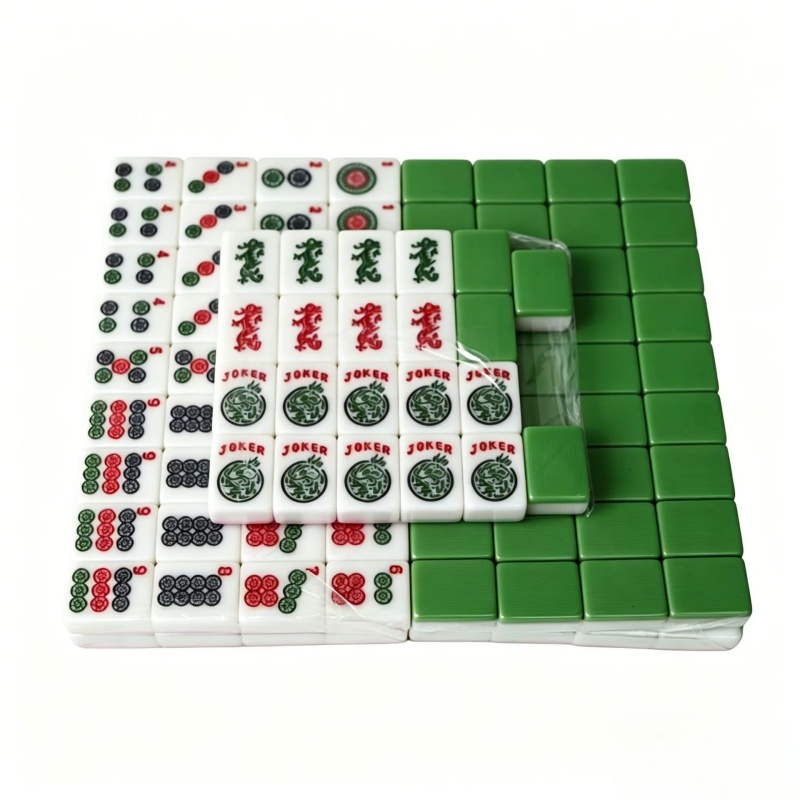
The 108 suit tiles do the real work. Three suits, characters, bamboo and circles, each run from 1 to 9, and every rank is printed four times. The 28 honour tiles carry no numbers at all: four winds (East, South, West, North) and three dragons (red, green, white), again four copies each. The last eight are bonus tiles, four flowers and four seasons, one copy apiece. Many groups play a 136-tile game by putting those eight bonus tiles back in the box.
| Tile group | Types | Copies of each | Total | Can form a run? |
|---|---|---|---|---|
| Character suit | 1 to 9 | 4 | 36 | Yes |
| Bamboo suit | 1 to 9 | 4 | 36 | Yes |
| Circle suit | 1 to 9 | 4 | 36 | Yes |
| Winds | East, South, West, North | 4 | 16 | No |
| Dragons | Red, green, white | 4 | 12 | No |
| Bonus tiles | Four flowers, four seasons | 1 | 8 | No |
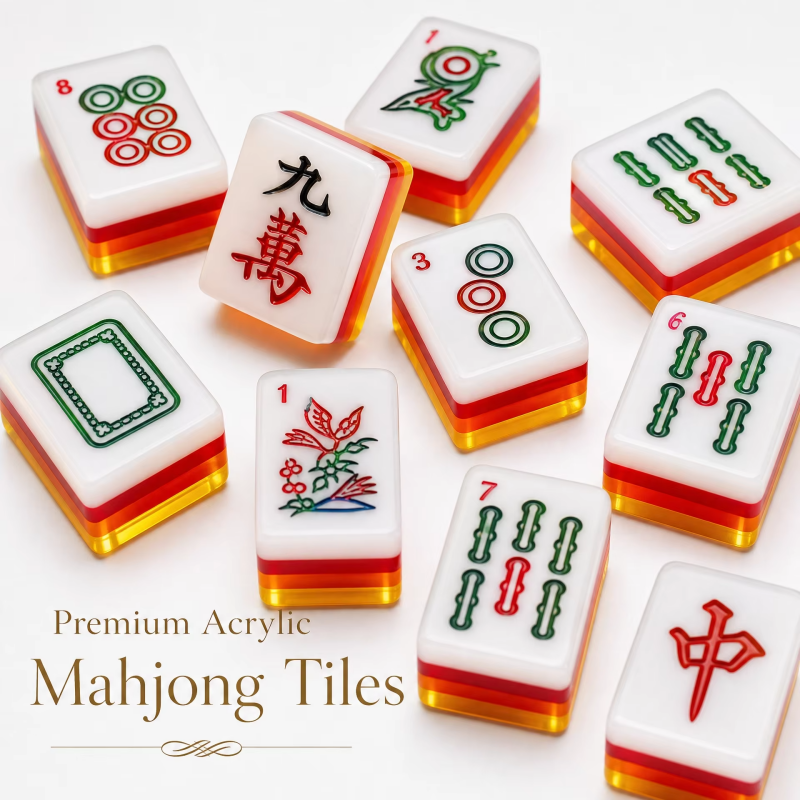
Suits are also the easiest place to start reading tiles, because every suit tile carries both a numeral and a pattern. Beginner-friendly sets go one step further and print a small Arabic numeral and a suit letter in one corner, which removes the "is that a 5 or a 7" pause that slows every first game.
A winning hand is 14 tiles: four sets plus one pair. A set is three identical tiles (a pung), four identical tiles (a kong), or three consecutive tiles of the same suit (a chow). The pair, sometimes called the eye, is simply two identical tiles.
One example makes it concrete. Three 3-bamboo, three 7-circles, three Red Dragons, three 5-characters and two East Winds add up to exactly 14 tiles and a completed hand.
Two rules catch beginners out. Chows can only be claimed from the player on your left, while pungs and kongs can be claimed from any seat. And honour tiles never form runs: three East Winds is a set, but East, South and West is not.
The turn itself takes seconds to learn. Draw one tile so you hold 14, then discard one so you hold 13 again. You are always a single useful tile away from finishing, which is why experienced players talk about "waiting" rather than "looking".
The physical setup is identical in nearly every style, so learn it once and it will serve you in any variant.
Official mahjong rulebooks are long, and most of that length is scoring. Here is what to set aside while your group learns the mechanics.
| Rule style | Tiles in play | Hand size | What a beginner should know |
|---|---|---|---|
| Hong Kong / Cantonese | 144 | 13 plus one drawn | Light scoring and fast hands, the easiest first style |
| Chinese Official (MCR) | 144 | 13 plus one drawn | Formal fan scoring, a good reference for hand shapes |
| Japanese riichi | 136 | 13 plus one drawn | Adds yaku, dora and riichi declarations, learn it second |
| American mah-jongg | 152 with jokers | 14, card-based | Hands come from an annual card rather than free building |
New players rarely lose because of bad luck. They lose to five repeatable habits.
The early curve is short, then it flattens at scoring. Teaching sessions tend to follow the same pattern.
The jump between the third and fourth milestone is the real test. Playing with open hands removes the need to remember what everyone else has discarded; playing unaided adds that back. Groups that skip the open-hand stage tend to stall right there.
Between sessions, tile-handling practice helps more than rule reading. Tile-based games such as dominoes train the same drawing, scanning and matching habits with far fewer rules, so the tiles feel familiar before the mahjong vocabulary arrives.
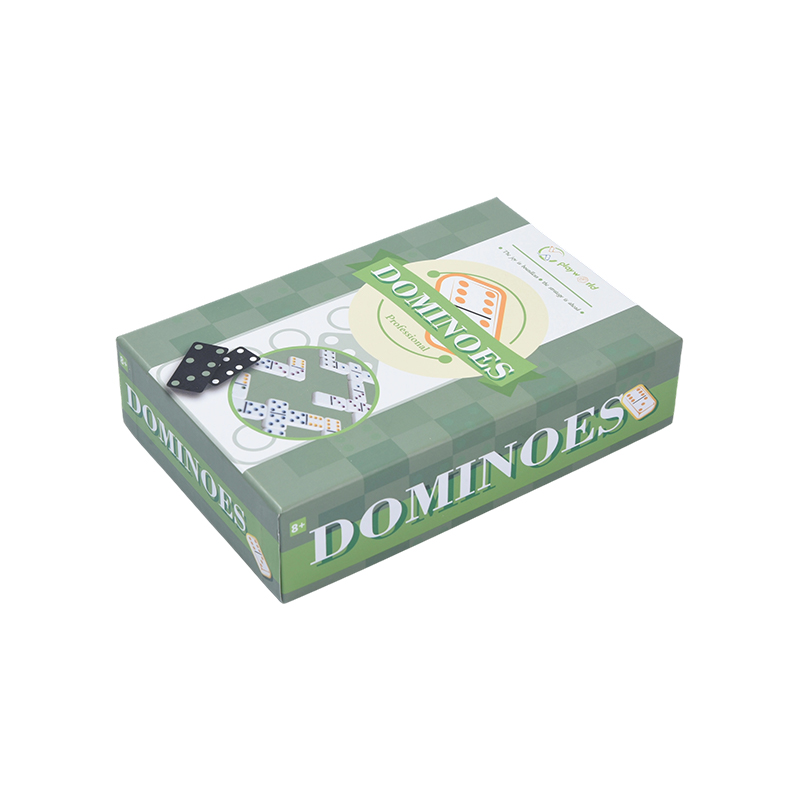 Classic 28-Tile Collection Professional Dominoes SetProduct Features Premium Tile ConstructionView Product →
A beginner set has one job: make 144 tiles easy to read, easy to shuffle and easy to store. Four details matter more than brand.
If you are buying for a family table, our mahjong tile sets follow the 144-tile standard, and the page lists the tile and case options available for beginners and for shops that resell them.
Many households use the same table for mahjong and for everything else, so a multi-game collection is worth keeping within reach for guests who are not ready for a full hand.
 Classic Board Game Collection in Gift Box 100-in-1Product Features 1. 100 Classic Games in One Set: Versatility and ValueView Product →
Ningbo Royal Import And Export Co., Ltd. is a professional game product sets manufacturer and game gift products factory, equipped with complete testing facilities and strong technical force. Our products are diverse in variety, superior in quality, reasonable in price and fashionable in design, and are widely used in industries such as gaming. Our products have been widely recognized and trusted by users and can meet the constantly changing economic and social demands. We welcome new and old customers from all walks of life to contact us for future business relations and common success.
Alongside tile sets, our catalogue covers classic board games, multi-game collections, party formats and accessories, which is why mahjong often sits on the same shelf as chess, checkers and dominoes in the sets we build.
A standard set has 144 tiles. Beginners usually play with 136 by removing the eight flower and season tiles, which do not change how a hand is built.
The mechanics are not: draw, discard, and collect four sets plus a pair. The difficult part is scoring, and you can postpone that for several sessions.
Standard mahjong is a four-player game. Two and three player variants exist, but four seats keep the walls, turn order and claim rules in their normal shape.
A pung is three identical tiles, a kong is four identical tiles, and a chow is three consecutive tiles in one suit, claimable only from the player on your left.
No. Play first completed hand wins, or one point per win, until building a hand stops requiring conscious thought.
Full-size tiles around 30 mm to 40 mm read and shuffle better when four people are learning. Mini sets are for travel and tight tables, not for a first serious table.

A professional enterprise specializing in the production of game gift products, with complete testing equipment and strong technical force.
Read MoreCONTACT US
For exclusive deals and latest offers, sign up by entering your email address below.
ORGANAIZATION INFO
Address: No. 329, Fangyan Road, Luotuo Street, Zhenhai District, Ningbo City, Zhejiang Province, China.
Phone:+86 15990507778
E-mail:[email protected]
Copyright © Ningbo Royal Import And Export Co., Ltd. All Rights Reserved. China Game Product Sets Manufacturers Wholesale Game Gift Products Factory privacy



 English
 Español
 Deutsch