2026.07.30
 Industry News
Content
The most fun drinking party games right now fall into four main groups: spinning and roulette style games, throwing and aim games, stacking and dice games, and classic board style sets adapted for parties. A wine table roulette set remains one of the most requested picks for a drinking games party because it needs almost no explanation, works for large groups, and turns a plain table into the center of the room within minutes. Alongside it, throwing games such as dartboard sets and beer pong style setups bring a competitive edge that keeps a room energetic for hours.
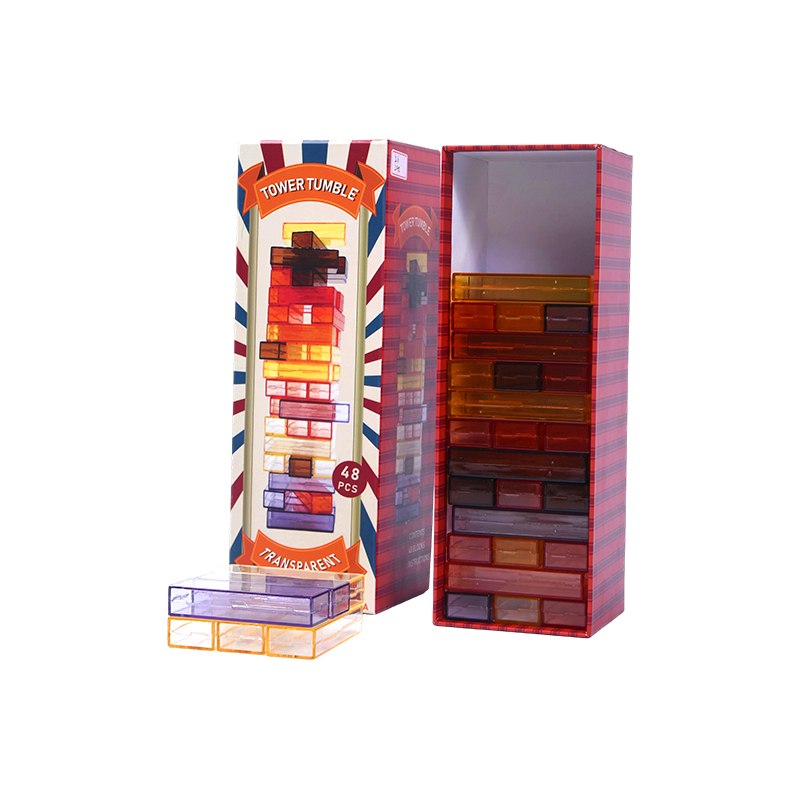
For hosts who want variety, mixing categories tends to work better than sticking to one style for an entire evening. A short roulette round followed by a stacking game such as drinking jenga keeps energy levels balanced, since roulette relies on chance while stacking relies on steady hands and nerve. Below is a general comparison of how different categories tend to be received across casual gatherings, bar nights, and outdoor parties, based on common feedback shared by party hosts and small bar operators who rotate game sets on a regular basis.
Illustrative engagement index out of 100, gathered from general observations shared by party hosts and small venue operators
Wine table roulette is built around random rotation paired with a light forfeit, which makes it a natural fit for social scenes such as house parties, bars, and holiday gatherings. A typical set uses a numbered wheel around 11.5 inches in diameter, a set of small cups or shot glasses arranged around the rim, and a metal ball that determines which glass gets picked. The wheel itself is usually built from aluminum alloy for the base and environmentally friendly plastic for the cup holders, which keeps the set light enough to move between rooms while still feeling sturdy on a table.
Because the outcome depends on the spin rather than skill, roulette style sets tend to include players who might sit out of a throwing or trivia game. A group of eight to twelve people can rotate through several spins in under ten minutes, which keeps the pace of a drinking games party moving without long waits between turns.
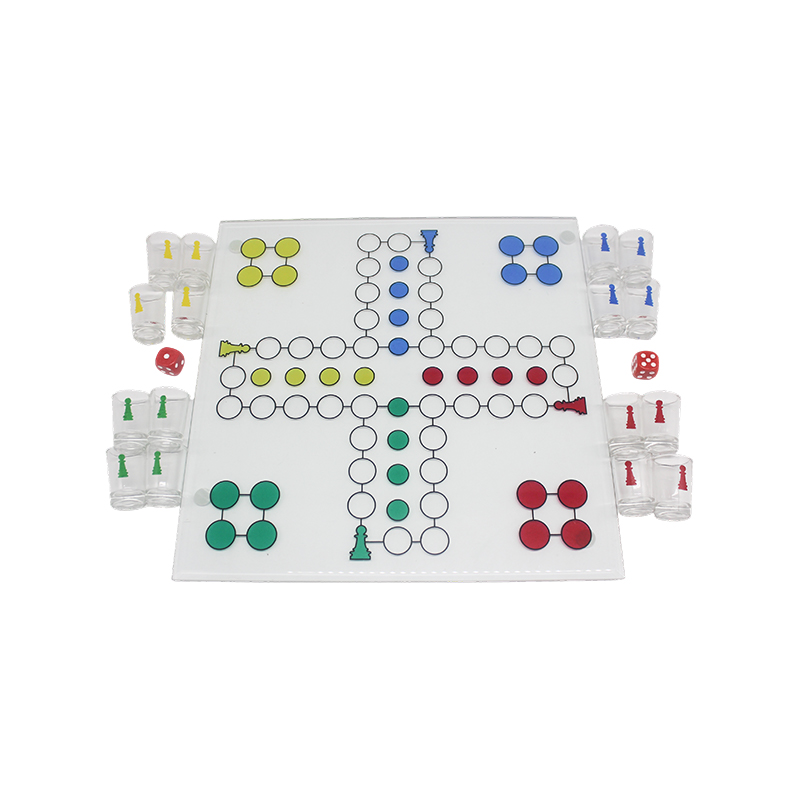
Hosts who enjoy the roulette format often add a crystal ludo drinking game set or a glass style chess set later in the evening once the group has warmed up, since both formats slow the pace slightly and give players a chance to sit and talk between turns.
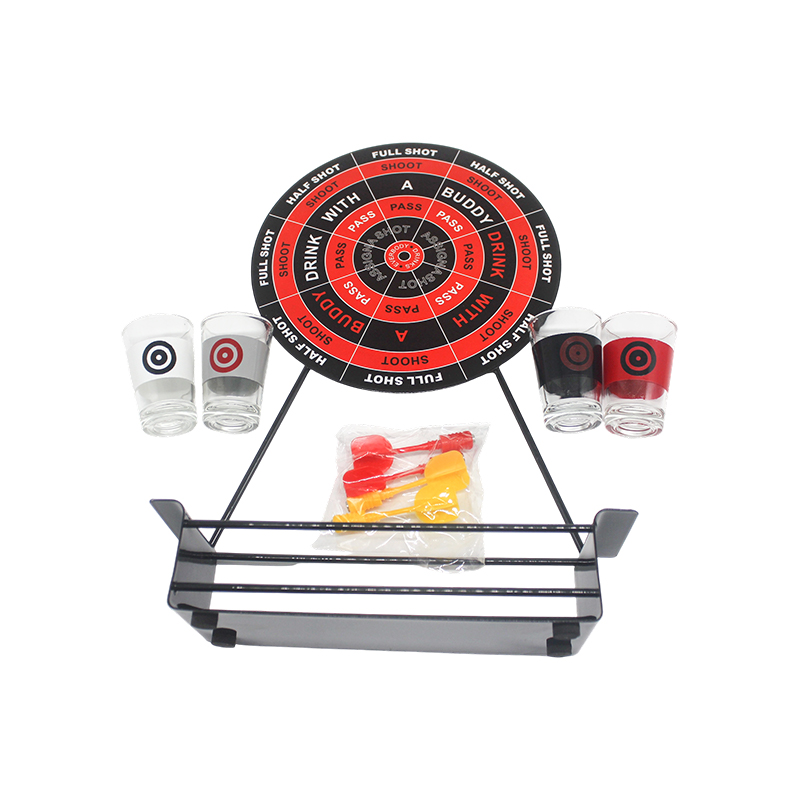
Throwing games center on accuracy rather than chance, which appeals to groups that enjoy a bit of friendly competition. This category includes dartboard drinking games, beer pong style setups, and simple bean bag or ring toss formats adapted for party use. These sets typically use lightweight materials such as plastic cups, wooden boards, or standard dart tips, paired with a straightforward scoring system that most players pick up after one demonstration round.
A dartboard drinking game pairs a standard scoring board with small forfeits tied to specific zones, giving players a reason to aim carefully rather than throw at random.
Cup based throwing games rely on standard sized cups arranged in a triangle or line, with players alternating turns until one side clears the setup.
Portable drinking games built around ring toss or bean bag targets fold down small enough to fit in a bag, which makes them a common pick for outdoor gatherings and travel.
Setup time is often the deciding factor when a host is choosing between throwing games and other categories. The chart below outlines typical setup time across five common formats, measured from unpacking the set to the first playable round.
Approximate setup time in minutes, based on standard box configurations for each game type
Choosing between formats often comes down to group size, available table space, and how much movement the group wants during the evening. The table below lines up five common sets side by side so hosts and buyers can compare the core skill involved, typical group size, and the setting each format tends to suit best.
| Game Set | Core Skill | Typical Group Size | Best Setting |
|---|---|---|---|
| Wine Table Roulette | Chance | 6 to 12 | Indoor social gatherings |
| Wooden Jenga Set | Steady hands | 2 to 6 | Small group tables |
| Dartboard Game | Accuracy | 4 to 10 | Bars and game rooms |
| Crystal Ludo Set | Turn strategy | 2 to 4 | Relaxed table settings |
| Glass XO Chess Set | Planning | 2 players | One on one matchups |
Beyond the table above, it helps to look at how these formats stack up across a wider set of qualities. The radar chart below compares three common formats across portability, skill requirement, social interaction, replay value, and flexibility for different group sizes, using a simple zero to ten scale for each quality.
Comparison scale of zero to ten for roulette, jenga, and dartboard style sets across common buyer priorities
Material choice affects how a set holds up across repeated parties, especially for sets that travel between homes, bars, or outdoor events. Card based drinking games generally rely on coated paper stock or thin plastic cards that resist bending and light moisture, while board style sets such as jenga and ludo use solid wood blocks or resin pieces that keep their shape after months of handling.
A set that gets used often, whether in a home, a bar, or a rental venue, needs to survive stacking, spinning, and handling by many different players in one night. Sets built with solid wood, aluminum alloy, and coated card stock tend to hold their shape better across dozens of sessions compared to thin single use materials.
Retailers, bar suppliers, and event rental businesses often look for a steady supply of party formats rather than a single set. Working directly with a drinking party games manufacturer allows buyers to adjust packaging, request specific material combinations, and plan around consistent production timelines rather than relying on fragmented small batch sources.
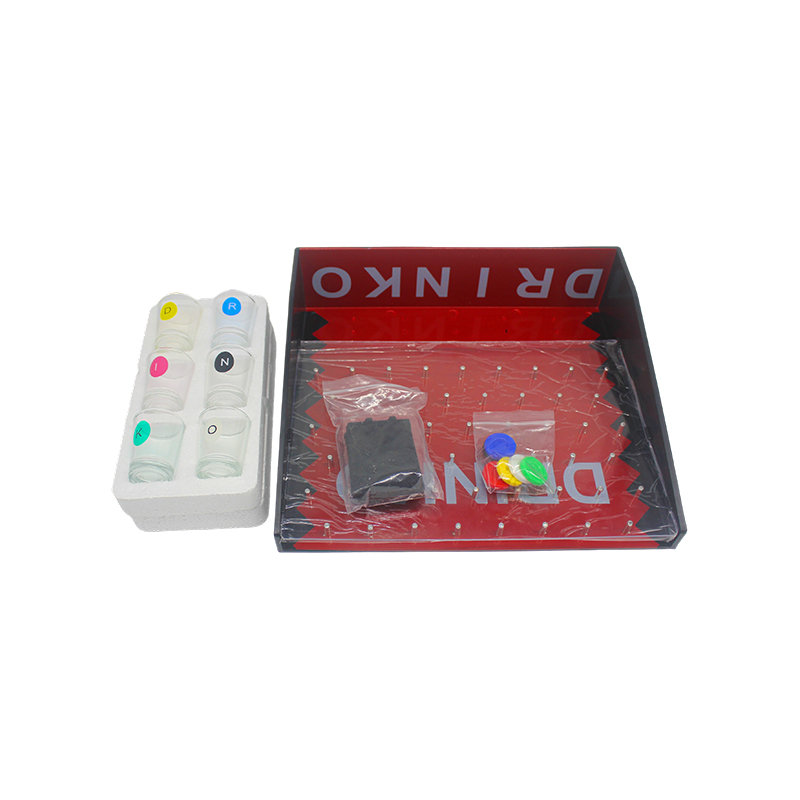
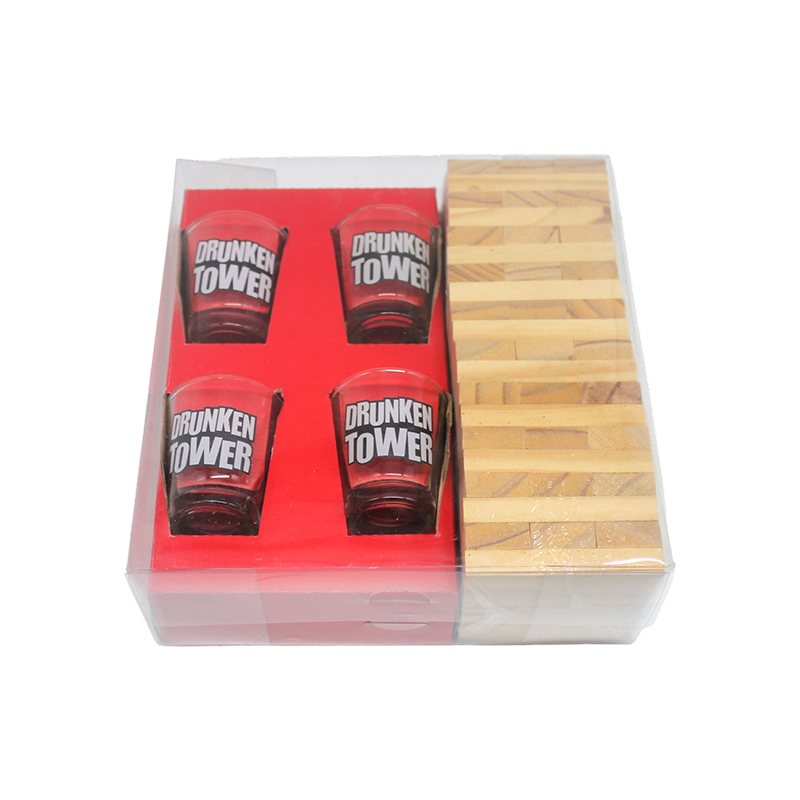
Ningbo Royal Import And Export Co., Ltd. works as an OEM drinking games party manufacturer and ODM drinking games party company, supported by testing facilities and a technical team that covers roulette style sets, throwing and aim formats, and board style drinking games. Our range spans the Pub-Style Drinking Game Set, the Pub-Style Entertainment Glass XO Chess Set, the Wooden Drinking Jenga Set with Shot Glasses, the Dartboard Drinking Game, the Crystal Ludo Drinking Game Set, and the Wine Table Roulette Game.
Two product families sit at the center of the catalog. The first centers on random rotation and light forfeits, represented by wine table roulette and turntable style formats, packaged with environmentally friendly plastic cups, a metal ball, and an aluminum alloy frame around an 11.5 inch wheel. The second family centers on throwing skill and accuracy, represented by cup toss, dartboard, and related formats, built from lightweight plastic cups, wooden boards, or standard darts paired with a straightforward scoring system.
Interest in party style formats tends to shift across the year, which matters for a party games wholesale supplier planning inventory ahead of peak seasons. The line chart below outlines a general seasonal pattern based on order and inquiry patterns observed across recent years.
Relative interest index across twelve months, reflecting general order and inquiry trends for party format products
This pattern is one reason many buyers treat a party games supplier relationship as an ongoing plan rather than a one time order, since summer travel season and end of year gatherings both tend to pull interest upward at different points in the calendar.
Once a host has picked a set of formats, a few small planning steps tend to make the biggest difference in how smoothly the evening runs.
Set out one format at a time rather than spreading every set across the table at once, since a cluttered table slows down turns and confuses new players.
Explain the scoring for a throwing or roulette format in one short round before starting the real game, so every player understands the rules before points matter.
Rotate between a chance based format and a skill based format every thirty to forty minutes to keep energy levels balanced across a longer party.
Keep a water station near the game table, since longer sessions of any drinking games party tend to run more smoothly when players pace themselves between rounds.
Indoor formats such as roulette and ludo work well in living rooms and rented event spaces with limited floor room, while throwing formats such as darts and cup toss need a bit more open space and benefit from a flat surface such as a patio, garage, or backyard. Portable drinking games that fold down small are a practical choice for anyone moving between venues across a single evening, such as a house gathering followed by an outdoor space later on.
They are used as party entertainment games that give a group a shared activity, whether the setting is a house gathering, a bar night, or an outdoor event.
Buyers range from individual hosts to bars, event rental companies, and businesses acting as a party games supplier for retail or hospitality customers.
Custom party games can often be adjusted in packaging design and branding elements depending on the production run and the manufacturer working on the order.
Card game materials typically include coated paper stock or thin plastic cards finished with a matte or gloss layer for durability across repeated use.
Wholesale party games are a common category for retailers and event suppliers, particularly formats such as roulette sets, jenga sets, and dartboard games that see steady demand.
Working with a party game manufacturer usually starts with reviewing available formats and materials, then coordinating packaging and production details directly with the supplier team.

A professional enterprise specializing in the production of game gift products, with complete testing equipment and strong technical force.
Read MoreCONTACT US
For exclusive deals and latest offers, sign up by entering your email address below.
ORGANAIZATION INFO
Address: No. 329, Fangyan Road, Luotuo Street, Zhenhai District, Ningbo City, Zhejiang Province, China.
Phone:+86 15990507778
E-mail:[email protected]
Copyright © Ningbo Royal Import And Export Co., Ltd. All Rights Reserved. China Game Product Sets Manufacturers Wholesale Game Gift Products Factory privacy



 English
 Español
 Deutsch