2026.04.09
 Industry News
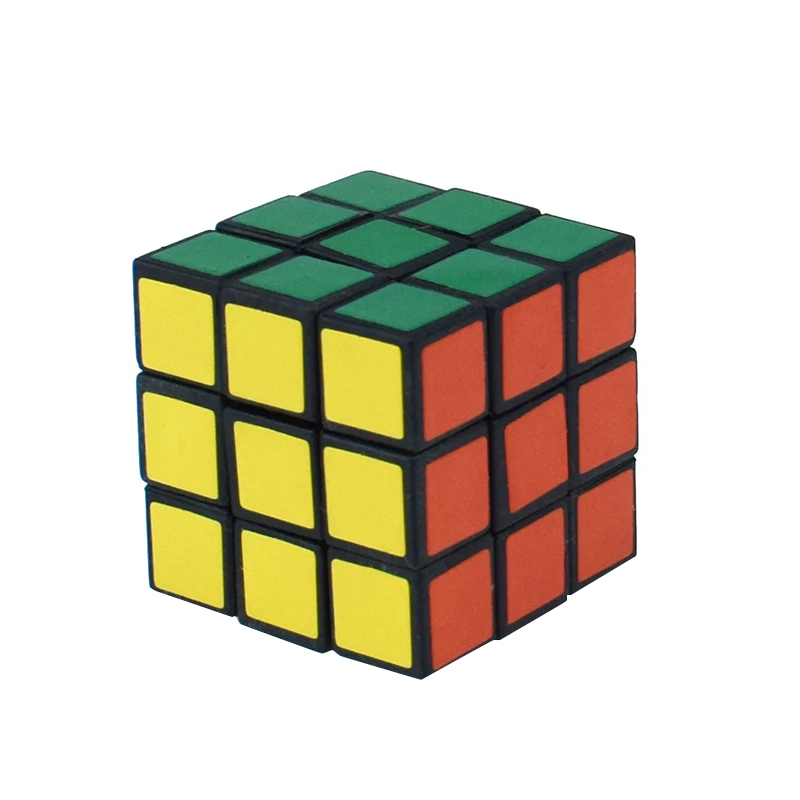
You can solve a 3x3x3 magnetic speed cube as a beginner by following a structured, layer-by-layer method — no advanced math or memorization required. Most beginners complete their first solve within 1 to 3 hours of focused practice using the beginner's method, which involves solving the cube in three stages: the bottom layer, the middle layer, and the top layer. This guide walks you through every step clearly, so you can go from scrambled to solved with confidence.
Whether you are using a Pro Competitive Vibrant Color 3x3x3 Magnetic Speed Cube or just starting out, the method and logic are the same. The magnetic structure simply makes turning smoother and more precise — a real advantage for building consistent solving habits from day one.
Content
Before diving into the solving steps, it helps to understand why the cube you use matters — especially for beginners.
A Professional 3x3 Speed Cube Magnetic uses small magnets embedded inside each piece to create satisfying, controlled snap-alignment between layers. This means:
Research from cubing communities shows that beginners using magnetic cubes reduce their average solve time plateau by 20–30% compared to those using non-magnetic budget cubes, simply due to more reliable layer alignment during practice.
Every solving method uses move notation — a shorthand system to describe how to turn the cube. You must know this before learning any algorithm.
| Notation | Face | Direction | Example Move |
|---|---|---|---|
| R | Right | Clockwise | Rotate right face 90° clockwise |
| R' | Right | Counter-clockwise | Rotate right face 90° counter-clockwise |
| U | Up (Top) | Clockwise | Rotate top face 90° clockwise |
| F | Front | Clockwise | Rotate front face 90° clockwise |
| L | Left | Clockwise | Rotate left face 90° clockwise |
| D | Down (Bottom) | Clockwise | Rotate bottom face 90° clockwise |
| B | Back | Clockwise | Rotate back face 90° clockwise |
| X2 | Any face | 180 degrees | Rotate that face 180° (two turns) |
Spend 5–10 minutes practicing these six basic moves before attempting any algorithm. Physical repetition is the fastest way to internalize notation.
The beginner's method — also called the Layer-by-Layer (LBL) method — begins with the bottom layer. Hold your cube so the color you want to solve first faces down. Most cubers start with white.
Your goal is to form a cross on the bottom face where the four edge pieces match the center colors of their adjacent side faces. There is no fixed algorithm for this — it is done intuitively. Key tips:
Once the cross is complete, fill in the four white corner pieces to finish the bottom layer. Use this algorithm depending on which side the corner is located:
After this stage, your bottom layer should be completely solved — all 9 pieces of one face showing the same color with matching side edges.
With the bottom layer done, flip the cube over so the solved face is on top (white on top). Now focus on inserting the four middle-layer edge pieces into their correct positions.
Look at the top layer for an edge piece that does not contain yellow (or whatever color is on the top center). This piece belongs in the middle layer. Align its top color to the matching center, then use one of two algorithms:
Repeat this for all four middle edges. If an edge is already in the middle layer but incorrectly oriented, use either algorithm to pop it out first, then re-insert it correctly.
The last layer is where most beginners spend the most time. It is solved in four sub-stages.
Use this algorithm: F R U R' U' F'. Depending on how many yellow edges are already showing on top (0, 2, or 4), you may need to apply it 1 to 3 times. Identify your starting pattern (dot, L-shape, or line) and apply accordingly.
Once a yellow cross exists on top, the edges may not match the side centers. Use: R U R' U R U2 R' to cycle the top edges until they align. You may need to perform this 2–3 times with rotation.
Find a corner that is already in its correct position (even if not oriented) and hold it at the front-right. Apply: U R U' L' U R' U' L to cycle the other three corners into place.
This is the final step. Hold the cube with an unsolved corner at the front-right and apply: R' D' R D (repeat 2 or 4 times until that corner's yellow faces up), then rotate the top layer (U) to move the next unsolved corner to front-right. Repeat until all corners are solved. Do not rotate the whole cube between corner adjustments — only rotate the U face.
Here is a realistic progression timeline for a beginner practicing with a Magnetic Speed Cube For Competition or a standard magnetic 3x3:
Fig. 1: Average solve time improvement for beginners using a magnetic speed cube over weeks of practice
As the chart shows, consistent daily practice of 15–30 minutes can bring a beginner from a 7-minute solve down to under 1 minute within 12 weeks. The steepest improvement happens in the first 3 weeks as algorithm muscle memory forms.
Once you can solve the cube reliably, these practical habits will help reduce your solve time significantly:
| Method | Algorithms to Learn | Avg Moves Per Solve | Typical Target Time |
|---|---|---|---|
| Beginner LBL | 5 – 7 | 90 – 120 | 1:00 – 3:00 min |
| CFOP (Intermediate) | 57 – 78 | 50 – 70 | 20 – 45 sec |
| CFOP (Advanced) | 78 – 119 | 45 – 60 | 8 – 20 sec |
If you plan to enter competitions after mastering the basics, the cube you choose becomes even more important. A Magnetic Speed Cube For Competition should meet these practical criteria:
A Professional 3x3 Speed Cube Magnetic with adjustable tension and magnetic strength gives you the flexibility to dial in the feel that suits your turning style as you progress from beginner to competitive solver.
Ningbo Royal Import And Export Co., Ltd. is a professional manufacturer of game gift products, equipped with complete testing facilities and strong technical force. Our products are diverse in variety, superior in quality, and fashionable in design, and are widely used in industries such as gaming.
As a professional China OEM Pro Competitive Vibrant Color 3x3x3 Magnetic Speed Cube Suppliers and ODM Pro Competitive Vibrant Color 3x3x3 Magnetic Speed Cube Factory, our products have been widely recognized and trusted by users and can meet the constantly changing economic and social demands. We welcome new and old customers from all walks of life to contact us for future business relations and common success.

A professional enterprise specializing in the production of game gift products, with complete testing equipment and strong technical force.
Read MoreCONTACT US
For exclusive deals and latest offers, sign up by entering your email address below.
ORGANAIZATION INFO
Address: No. 329, Fangyan Road, Luotuo Street, Zhenhai District, Ningbo City, Zhejiang Province, China.
Phone:+86 15990507778
E-mail:[email protected]
Copyright © Ningbo Royal Import And Export Co., Ltd. All Rights Reserved. China Game Product Sets Manufacturers Wholesale Game Gift Products Factory privacy



 English
 Español
 Deutsch