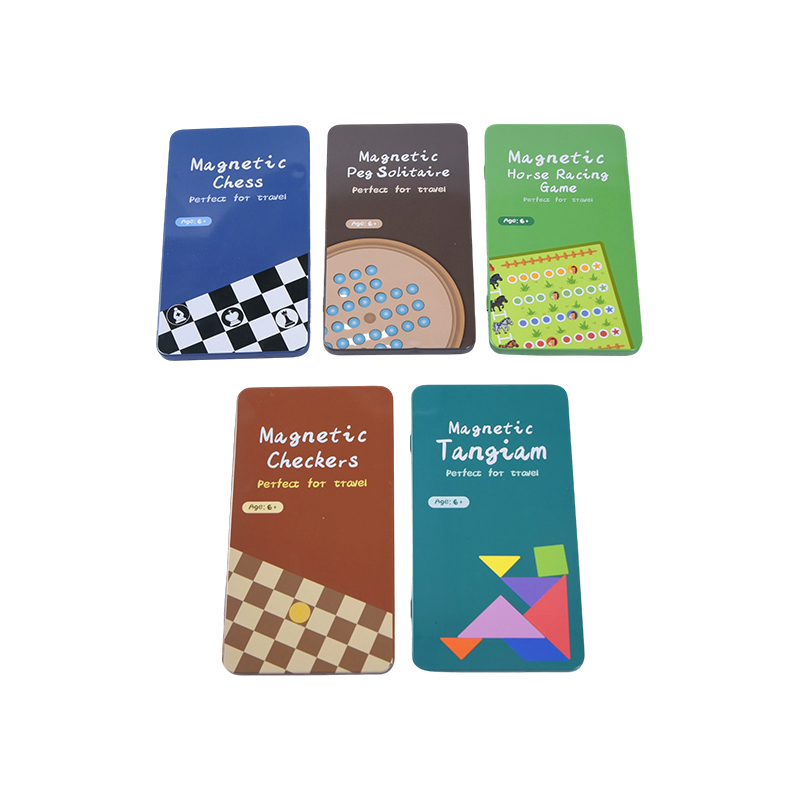

 2026.11.04
 Industry News
A buyer opens a carton of six sample games marked "brain training" and finds that five ask the player to do the same thing: match a pattern. The sixth asks the player to hold a rule in mind, switch it halfway through, and live with the result. That sixth set is the one a teacher reaches for in week four.
Cognitive development games earn the label when the rule system carries the difficulty, not the artwork. Three levers do most of the work: how many things a player must hold in mind at once, how often the rule changes, and how quickly a wrong move becomes obvious. Get those right and a plain wooden puzzle outperforms a plastic box with "educational" printed on the front.
What follows is a working guide for buyers, teachers and product teams: the skills these games actually train, which mechanics load which skill, how age bands change the design, where physical quality shows up, and what to verify before an order ships.
Content
Executive function is usually described as three related but separable abilities: working memory, inhibitory control and cognitive flexibility (Diamond, 2013, Annual Review of Psychology). Cognitive games load them in different proportions, which is why a sensible range needs more than one format.
The capacity limit matters commercially. Adults hold roughly four chunks in working memory at once, and young children hold fewer (Cowan, 2001, Behavioral and Brain Sciences). A set that asks a five-year-old to track six rules trains frustration, not memory. Games built around spatial and symbolic reasoning, the family usually sold as STEM education board games, are the clearest case in point: the learning sits in the manipulation, not the instruction sheet.
Before artwork, before packaging, decide what the set is supposed to load. The table below is the map we use when planning a range.
| Mechanic | Primary skill load | Typical band | Check before buying |
|---|---|---|---|
| Tangram and pattern blocks | Spatial reasoning, mental rotation | 4–10 | Seven pieces, uniform thickness, graded template cards |
| Matching pairs | Working memory, attention | 3–7 | Cards per deck, opaque backs, rounded corners |
| Multi-in-one classic sets | Rule switching, verbal instruction | 6–adult | Rule sheet clarity, board registration, insert fit |
| Sliding and rail logic puzzles | Planning, sequential reasoning | 6–12 | Smooth travel, reset speed, printed solution key |
| Dice and score games | Numeracy, probability intuition | 7–adult | Score pad legibility, dice weight, cup durability |
| Stacking and balance games | Inhibition, fine motor control | 4–adult | Block uniformity (1 mm matters), edge sanding |
Piaget's stage model is still the most practical rough map for planning a range. Sensorimotor (0–2) is mouthing and object permanence. Preoperational (2–7) is symbols, pretend play and one-feature-at-a-time logic. Concrete operational (7–11) is conservation, rules and reversibility. Formal operational (11+) is abstract hypothesis testing.
Two cautions. The boundaries are approximate, and children reach them at very different rates. And a stage label is not a difficulty dial: a seven-year-old can fail at a badly written rule and succeed at a well-written one two bands above.
In practice: below seven, keep rule counts at two or three and paint the rule onto the board so it stays visible. From seven, add a second rule that can be switched, because switching is where flexibility is genuinely trained.
Piece count is the easiest claim to print on a box and the weakest predictor of learning. A 50-in-1 set is excellent value as a range anchor, but only if every game in it can be run by a child without an adult reading the sheet aloud. The profile below compares how three common formats load the same five skills.
Tangram-style manipulatives are almost pure spatial work. Multi-in-one classic sets spread the load across rule control and memory. Rail-and-slide logic puzzles concentrate on planning, which makes them the format most likely to be abandoned by a child who is not yet ready to plan three moves ahead.
 Rail Glide Metallic Cognition Challenger PuzzleA progressive rail-and-slide puzzle for ages 8+, with tactile metal pieces, 20+ challenges, and a travel-ready case for planning practice.View Product →
Three parts fail first, and all three are visible in a sample.
Ask for a drop test and a transit simulation for the retail pack, not only the master carton.
Toy safety is a documentation exercise before it is a design one. Depending on the destination, expect EN 71-1/2/3 for the EU, ASTM F963 and CPSIA for the US, GB 6675 for China, and REACH for restricted substances; heavy metals in coatings and phthalate content are the two most common failure points in printed parts.
Magnets deserve separate attention. Small high-powered magnets that escape their housing are a serious ingestion hazard, so a magnetic travel set should be checked for retention after drop, not only at final inspection. For anything aimed at under-threes, a small-parts assessment decides the warning text and, often, the piece size itself.
A certificate is only useful when it matches the SKU, the material and the market. The same report reused across a whole catalogue is a warning sign, not a shortcut.
Ningbo Royal Import And Export Co., Ltd. is a professional game product sets manufacturer and game gift products factory, equipped with complete testing facilities and strong technical force. Our products are diverse in variety, superior in quality, reasonable in price and fashionable in design, and are widely used in gaming and education. They have been widely recognized and trusted by users and can meet constantly changing economic and social demands. New and old customers from all walks of life are welcome to contact us for future business relations and common success.
The educational board games range is where most of the decisions above come together, from Montessori manipulatives to magnetic travel sets. For buyers who need one set to cover several skills at once, a compact multi-game tin is usually the most efficient answer, provided the rule sheet is written for a child rather than an adult.
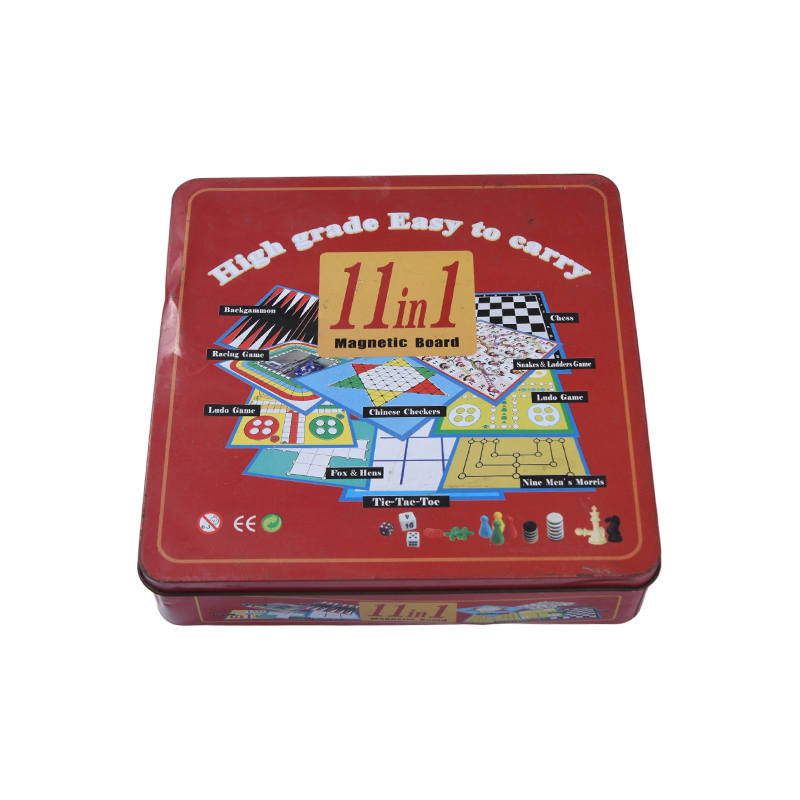 11-in-1 Magnetic Board Game Set in Red TinA compact eleven-game tin with magnetic pieces and organized storage, suited to families seeking one portable set for varied skill levels.View Product →

A professional enterprise specializing in the production of game gift products, with complete testing equipment and strong technical force.
Read MoreCONTACT US
For exclusive deals and latest offers, sign up by entering your email address below.
ORGANAIZATION INFO
Address: No. 329, Fangyan Road, Luotuo Street, Zhenhai District, Ningbo City, Zhejiang Province, China.
Phone:+86 15990507778
E-mail:[email protected]
Copyright © Ningbo Royal Import And Export Co., Ltd. All Rights Reserved. China Game Product Sets Manufacturers Wholesale Game Gift Products Factory privacy



 English
 Español
 Deutsch