
 2025.12.10
 News
News
Educational games are innovative products that perfectly combine learning and entertainment. Through gamified elements such as puzzles, exploration, and strategy, they make traditional academic subjects (such as mathematics, language, and science) and key skills (such as logical thinking, creativity, and collaboration) lively and engaging. Educational games not only effectively stimulate students' interest in learning but also help them better absorb knowledge and develop skills. Whether in the classroom, in home education, or as a self-study tool, educational games can transform tedious learning content, boost motivation, and allow students to complete challenges and gain a sense of accomplishment in a relaxed and enjoyable atmosphere.
The biggest highlight of educational games is their ability to cleverly combine knowledge and games, making learning no longer monotonous and boring. Through games, players can learn new knowledge and improve various skills while enjoying the challenges.
Advantages and Characteristics:
Stimulate learning interest: Educational games stimulate students' interest in learning through fun challenges and tasks, breaking the monotony of traditional learning methods.
Strong interactivity: Most educational games emphasize player interaction, allowing children to actively think and explore during the process, enhancing their hands-on abilities.
Skill development: In addition to academic knowledge, educational games also focus on cultivating students' logical thinking, creativity, teamwork, and problem-solving abilities.
Strong adaptability: These games are suitable for all age groups; elementary school students, middle school students, and adults can all find suitable challenges and tasks.
Sense of accomplishment: By completing tasks and overcoming levels, players can receive immediate feedback and a sense of accomplishment, thereby enhancing their motivation and confidence in learning.
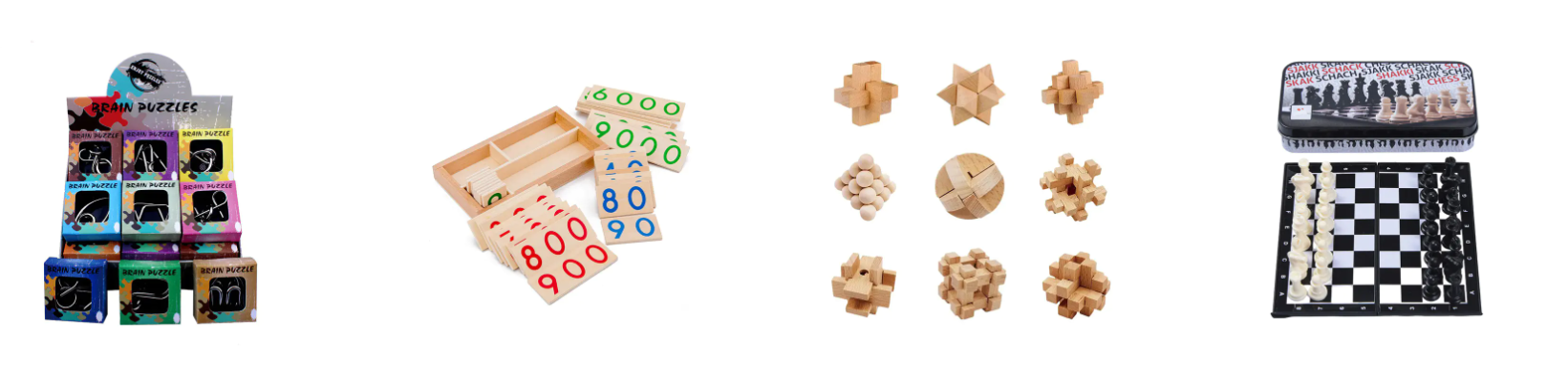
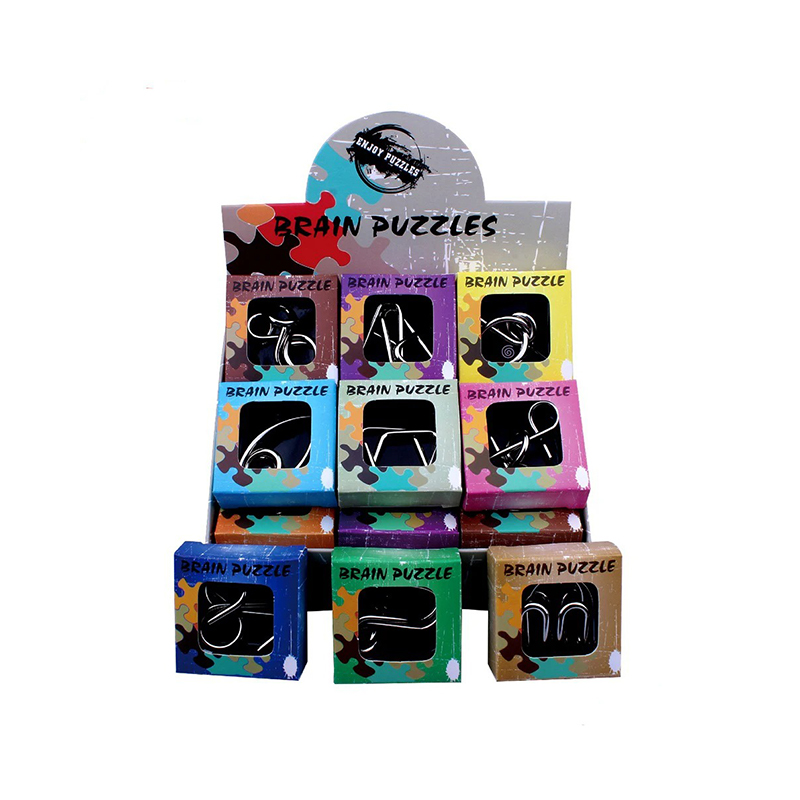
Rail Glide Metal Cognitive Challenge Puzzle
The Rail Glide Metal Cognitive Challenge Puzzle is a puzzle game designed specifically to exercise logical thinking and spatial imagination. By combining metal blocks of different shapes into a specific figure, players need to use logical reasoning and also exercise patience and problem-solving skills.
Advantages and Characteristics: This game uses high-quality metal materials, and the puzzle challenges are of moderate difficulty, suitable for players of different ages. The puzzle shapes are varied, which can improve players' spatial cognitive ability, logical thinking, and meticulous observation skills.
Applicable scenarios: Suitable for family entertainment, school auxiliary teaching, personal entertainment, etc.
Maintenance and care: Keep dry and avoid strong impacts or scratches on the metal surface. Wipe regularly to keep the metal surface shiny.
Stack Nature Wooden Building Blocks
Stack Nature Wooden Building Blocks is an educational game that focuses on cultivating creativity and hand-eye coordination. Players can create various shapes and structures by stacking different shaped wooden blocks, exercising their hands-on abilities and developing spatial perception and innovative thinking.
Advantages: This set of building blocks uses environmentally friendly wood, features a simple and beautiful design, and incorporates natural elements. The blocks come in a variety of shapes, suitable for creative building by players of different ages, helping to develop imagination and innovation.
Applicable scenarios: Family education, early learning, parent-child interaction, etc.
Maintenance: The building blocks should be cleaned regularly and kept away from water and chemicals. Wooden building blocks should be kept away from humid or high-temperature environments to prevent deformation.
Montessori Modular Wooden Math Set
The Montessori Modular Wooden Math Set is a math education tool designed for children, using physical modules to help children understand basic mathematical concepts such as addition, subtraction, and multiplication. This game emphasizes learning mathematics through practical operation, improving children's mathematical logical thinking skills.
Advantages: The modular design allows children to intuitively understand abstract mathematical concepts. The bright colors and diverse shapes attract children's attention. During use, children can experience the fun of mathematics through hands-on operation.
Applicable scenarios: Suitable for early math enlightenment, classroom teaching, family education, etc.
Maintenance: Wooden materials should be cleaned regularly and kept away from moisture and high temperatures to maintain their original shape.
Montessori Colorful Wooden Tangram Set
The Montessori Colorful Wooden Tangram Set uses seven different shaped wooden blocks to assemble different shapes, helping children improve shape recognition, spatial imagination, and problem-solving abilities.
Advantages: The tangram uses environmentally friendly wood, features a creative design and bright colors. Children enhance their logical thinking and hands-on abilities through the puzzle-solving process.
Applicable scenarios: Suitable for preschool children for shape recognition and spatial thinking training, and also suitable for classroom and family teaching.
Maintenance: Clean regularly, avoid exposure to humid or high-temperature environments, and maintain the integrity of the puzzle.
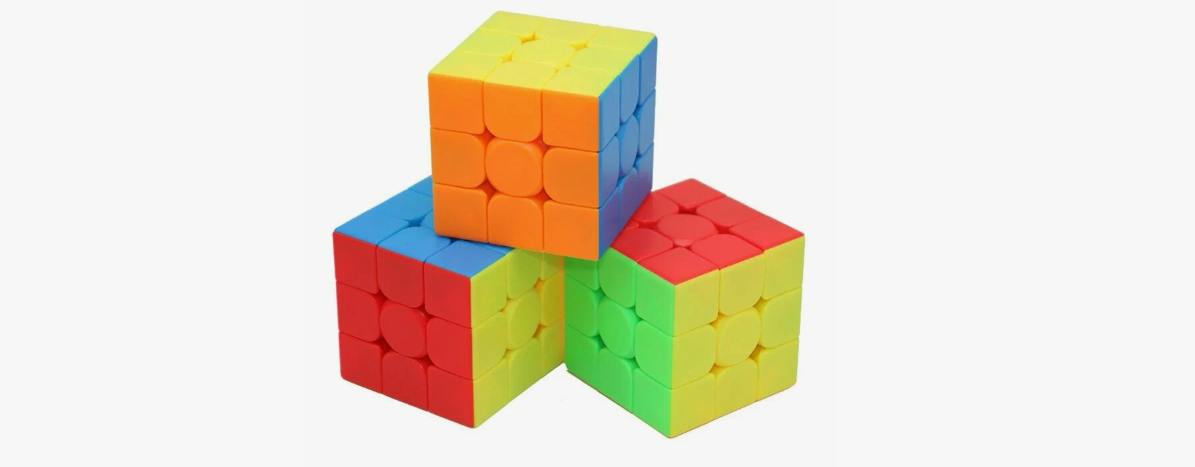
Professional Competitive Colorful 3x3x3 Magnetic Speed Cube
The 3x3x3 Magnetic Speed Cube is a classic intellectual game suitable for exercising spatial imagination, reaction ability, and strategic thinking. It can be used not only as a tool for leisure and entertainment, but also to improve puzzle-solving skills through competitive games.
Advantages and Features: Uses a high-quality magnetic system for smoother and more fluid rotation. The game difficulty is moderate, satisfying the challenge needs of beginners and the competitive requirements of advanced players.
Applicable Scenarios: Suitable for personal entertainment, family entertainment, intellectual training, and competitive games.
Maintenance: Keep the cube clean and avoid water and sand. Regularly add lubricant to ensure smooth rotation.
48-Piece Wooden Stacking Blocks Set
Stacking Blocks is a classic block game where players need to maintain balance while stacking blocks to prevent the tower from collapsing. This game exercises players' hand-eye coordination, reaction ability, and spatial judgment.
Advantages and Features: Made of high-quality wood, with a simple yet challenging design. The block size is suitable for both children and adults, enhancing children's concentration and allowing adults to enjoy competitive fun in a relaxed atmosphere.
Applicable Scenarios: Suitable for family gatherings, parent-child activities, and school classrooms.
Maintenance: Regularly check the integrity of the blocks to avoid damage. Keep the blocks dry and avoid moisture.
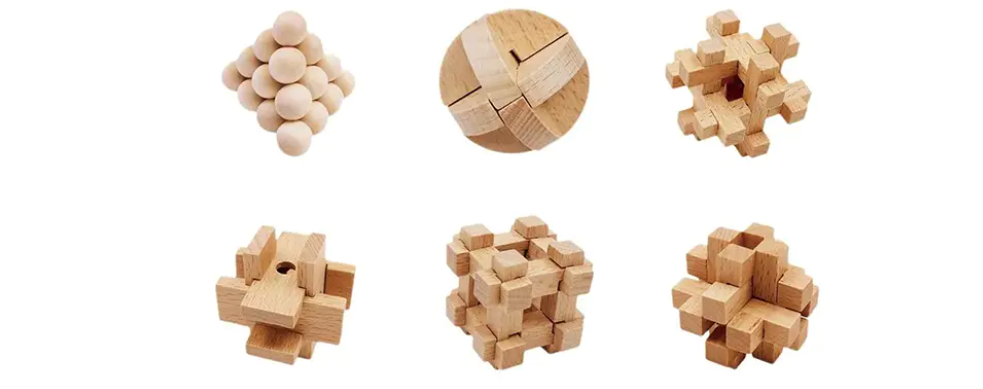
12-Piece Wooden Kongming Lock Set
The Kongming Lock is a traditional intellectual game suitable for exercising players' spatial thinking, logical reasoning, and patience. Players experience the fun of unlocking by disassembling and assembling the wooden locks.
Advantages and Features: This game uses high-quality wood, has a unique design, and the game difficulty gradually increases, attracting players of different ages to take on the challenge.
Applicable Scenarios: Suitable for intellectual training, family entertainment, and parent-child activities.
Maintenance: Wooden Kongming locks should be kept away from humid environments and wiped regularly to maintain their luster.
Educational Game Product Table:
| Product Name | Key Features | Suitable Scenarios | Maintenance & Care |
| Rail Glide Metal Cognitive Puzzle | High-quality metal, moderate difficulty, enhances spatial cognition and logic. | Family entertainment, education, personal play | Keep dry, avoid impacts, clean regularly. |
| Stack Nature Wooden Blocks | Eco-friendly wood, creative design, fosters spatial awareness and imagination. | Family education, early learning, parent-child interaction | Avoid water and chemicals, prevent moisture. |
| Montessori Modular Math Wooden Set | Modular design, intuitive math learning, vibrant colors, hands-on experience. | Early math education, classroom, home teaching | Clean regularly, avoid moisture and heat. |
| Montessori Colorful Wooden Tangram | Eco-friendly wood, enhances logic and hands-on skills, creative patterns. | Preschool learning, classroom and home teaching | Clean regularly, avoid moisture and heat. |
| Professional 3x3x3 Magnetic Speed Cube | Magnetic system, smooth rotation, improves spatial and strategic thinking. | Personal play, competitions, family fun | Keep clean, avoid water and sand, lubricate. |
| 48-Piece Wooden Jenga Set | High-quality wood, challenging, improves hand-eye coordination and balance. | Family gatherings, classroom, team building | Check for damage, keep dry. |
| 12-Piece Wooden Burr Puzzle Set | Unique design, progressive difficulty, enhances logic and spatial thinking. | Brain training, family entertainment | Avoid moisture, clean regularly. |
Educational games not only enhance students' learning interest but also promote the development of intellectual, emotional, and social skills. The following are the roles of educational games in various areas:
Learning Subject Knowledge
Educational games make subject knowledge more engaging through interaction and manipulation. For example, modular wooden math sets help students master basic mathematical concepts, while tangrams help students understand geometric principles through shape manipulation.
Practical Skills and Creativity
Through hands-on activities in games such as puzzles, building blocks, and Rubik's Cubes, students can not only develop practical skills but also improve their creativity and problem-solving abilities.
Teamwork and Communication Skills
Many educational games are team-based, requiring players to collaborate to complete tasks. In this way, students can learn teamwork and effective communication, fostering leadership and social skills.
Educational games play a significant role not only in traditional classrooms but also in a wide range of different scenarios, greatly expanding the boundaries of learning. From home education to school classrooms, and to various training institutions and social interaction venues, the application scenarios of educational games are diverse and can meet the learning experiences of different age groups and needs.
Next, we will delve into the application of educational games in different scenarios and how these scenarios can stimulate students' learning interest and promote skill development.
(1) Classroom-Based Teaching Assistance
The application of educational games in the classroom provides a powerful complement to traditional teaching methods. Teachers can transform abstract and tedious knowledge points into highly interactive and engaging activities through gamification. This approach not only increases student participation but also helps them better understand and master the knowledge.
Application Scenarios and Advantages:
Stimulating student interest: Educational games, by introducing game elements, allow students to learn in a relaxed and enjoyable environment, helping them to better engage with the classroom content.
Improving learning effectiveness: Through interactive and practical game activities, students can deepen their understanding and memory of knowledge through hands-on experience. For example, the Montessori modular wooden math set helps children intuitively understand mathematical operation principles through physical modules.
Adapting to different learning styles: Games provide multiple ways of learning, meeting the needs of different students. Whether visual, auditory, or kinesthetic learners, all can benefit.
Typical Product Applications:
Math module games: Such as the Montessori modular wooden math set, which helps students understand basic mathematical concepts such as addition, subtraction, and multiplication through hands-on operation.
Language learning games: Through spelling and grammar puzzles, students can consolidate their language knowledge while playing.
Science exploration games: Such as science experiment puzzles, which help students experience and master scientific principles through games.
(2) Home Education
Home education is one of the important application scenarios for educational games. Parents can not only use these games to help their children learn but also strengthen parent-child relationships through playing together. Educational games provide parents with a fun way to participate in their children's growth and learning.
Application Scenarios and Advantages:
Parent-child interaction: By playing educational games with their children, parents can better understand their children's interests and learning progress, while also strengthening the parent-child relationship. Learning by Doing: Many educational games not only allow children to learn knowledge while playing, but also cultivate their thinking skills, hands-on abilities, and social skills.
Personalized Learning: Parents can choose suitable games based on their children's interests and developmental needs, thereby achieving targeted education in a relaxed and enjoyable atmosphere.
Typical Product Applications:
Building Block Games: Such as Stack Nature wooden building blocks, where parents and children build together, not only exercising children's hands-on abilities but also stimulating their creativity.
Puzzle Games: Such as Rail Glide metal cognitive challenge puzzles, helping children improve their logical thinking and problem-solving abilities.
Creative Games: Such as Montessori colorful wooden tangrams, improving children's spatial imagination and shape recognition abilities through graphic assembly.
(3) Self-Study and Online Education
With the rise of self-study culture and online education, educational games have also become an important tool for many self-learners and online learners. Through gamified learning, students can maintain a high level of learning interest during self-study and master new knowledge in a relaxed and enjoyable atmosphere.
Application Scenarios and Advantages:
Self-driven learning method: Educational games can help learners master knowledge through self-exploration and practice without a teacher.
Adapting to individual needs: Self-learners can choose suitable educational games based on their interests and knowledge level for targeted learning.
Improving learning efficiency: Educational games, through incentive mechanisms and instant feedback, help learners maintain learning motivation and ensure that the learning process is both efficient and enjoyable.
Typical Product Applications:
Logical Reasoning Games: Such as the professional competitive colorful 3x3x3 magnetic speed cube, suitable for self-learners to improve puzzle-solving skills through continuous practice.
Mathematics and Language Games: Such as the Montessori modular wooden math set or language spelling games, helping students consolidate basic knowledge during self-study.
Thinking Training Games: Such as Kongming lock puzzles, helping students exercise spatial thinking and logical reasoning abilities.
(4) Training Institutions and Enrichment Classes
The application of educational games in various training institutions and enrichment classes can help students master knowledge and skills through interaction and practice. Especially in training institutions focused on cognitive training, creativity, and logical reasoning, educational games can provide students with more practical opportunities.
Application Scenarios and Advantages:
Enriching teaching methods: The introduction of educational games breaks the monotony of traditional teaching methods, making training courses more lively and engaging, helping students better understand and absorb knowledge.
Increasing student participation: Educational games emphasize interaction and competition, which can stimulate students' enthusiasm and enhance their sense of participation.
Adapting to different learning stages: Educational games can be adjusted according to students' learning progress and needs, thus better meeting the needs of students of different ages and learning stages.
Typical Product Applications:
Creativity and hands-on skills development: Such as Stack Nature wooden building blocks and Montessori colored wooden tangrams, which help students improve creativity, logical thinking, and hands-on abilities.
Logic and strategy games: Such as Rail Glide metal cognitive challenge puzzles and Kongming locks, which help students exercise reasoning and problem-solving skills while having fun.
Intellectual competitive games: Such as the 3x3x3 magnetic speed cube, suitable for competitive games in enrichment classes, improving students' reaction speed and problem-solving abilities.
(5) Social Interaction and Team Building
Educational games are not only individual learning tools, but also play an important role in social interaction and team building. Through collaborative educational games, players can not only exercise their intelligence but also improve teamwork and communication skills, and enhance mutual understanding.
Application Scenarios and Advantages:
Improving Teamwork Skills: Many educational games require teamwork to complete tasks, which effectively promotes interaction and cooperation among team members and enhances team cohesion.
Enhancing Social Skills: Through interaction and communication, educational games allow participants to practice social skills in a relaxed atmosphere and improve teamwork spirit.
Suitable for Multiple Scenarios: Educational games are suitable for various social occasions such as company team building activities and friend gatherings, providing a fun and meaningful social activity.
Typical Product Applications:
Team Collaboration Games: For example, desktop puzzle games and strategy games that require multiple people to work together to complete tasks.
Competitive Games: Such as the 3x3x3 magnetic speed cube, used in social activities for competitive games to improve reaction speed and problem-solving skills.
(6) Healing and Mental Health
Educational games can also be used for mental health and healing. Through interactive and creative challenges, educational games help reduce stress and promote relaxation, making them particularly suitable for psychological counseling and emotional regulation.
Application Scenarios and Advantages:
Stress Reduction and Relaxation: Through engaging gamified elements, educational games can effectively help players relax and reduce anxiety and stress.
Promoting Cognitive Shift: Educational games can focus players' attention on task challenges, helping them escape negative emotions and promoting mental well-being.
Adaptable to Different Groups: From children to adults, educational games can adapt to the psychological needs of different age groups, becoming an effective tool for psychological counseling and self-regulation.
Typical Product Applications:
Cognitive Training Games: Such as the 3x3x3 magnetic speed cube, helping players exercise logical thinking while relaxing.
Creative Expression Games: Such as Stack Nature wooden building blocks, helping players release stress through creative processes.

The core value of educational games lies in combining learning and entertainment through gamification elements, providing players with an experience that challenges their thinking and enhances their abilities. As educational games become increasingly popular among parents, teachers, and self-learners, effectively maintaining these games is crucial to preserving their educational value and entertainment appeal.
(1) Maintenance of Physical Components: Ensuring Durability and Safety
For educational games involving physical components, such as "Rail Glide Metal Cognitive Challenge Puzzle" and "Stack Nature Wooden Building Blocks," regular inspection and cleaning are essential.
Metal and Wooden Parts:
Metal parts (such as metal pieces in puzzles) and wooden parts (such as building blocks, tangrams, etc.) in games are prone to wear and tear or damage. Regularly check these parts for cracks, loose nails, or rust. If problems are found, use appropriate tools to repair or replace the damaged parts.
Cleaning:
Wooden building blocks, puzzles, and other game components can easily accumulate dust or stains. Wipe the surfaces clean with a damp cloth, avoiding excessive moisture. For wooden parts, regularly apply natural wood oil to maintain their luster and texture.
Safety Check:
Ensure that all parts do not have sharp edges or protruding parts to prevent injuries. Parents or teachers need to regularly check the safety of these games, especially for young children. Any small parts require extra caution to prevent accidental ingestion or other accidents.
(2) Management of Modular Components: Ensuring Compatibility and Integrity
For educational tools with modular designs, such as the "Montessori Mathematical Modular Wooden Set" and the "Montessori Colorful Wooden Tangram Set," the focus of maintenance is on ensuring that each module is intact and remains compatible for continued use.
Categorized Storage:
These modular components usually have many small parts. To avoid loss or confusion, it is recommended to store each part by type. For example, use labeled boxes or bags to store modules of different colors and sizes separately, making it easy to quickly find the required components when needed.
Regular Inspection of Parts:
If the interfaces between modules become loose or deformed, it may affect the smooth operation of the game. Regularly check and ensure that each module connects tightly, preventing parts from being lost or damaged. Updates and Expansion:
As children grow and their learning levels improve, the content of educational games should also be continuously expanded. New modules or materials can be added to the game regularly, allowing players to experience new fun and knowledge through ever-increasing challenges.
(3) Technical Maintenance of Educational Games: Ensuring Accuracy and Smoothness
For educational games that rely on precise and smooth operation, such as the "Professional Competitive Colorful 3x3x3 Magnetic Speed Cube," proper maintenance is crucial to maintaining the gaming experience.
Checking the Magnetic System:
The magnetic system of puzzle games like Rubik's Cubes may wear out or weaken over time. Regularly check the condition of the magnets to ensure they still adhere firmly and maintain smooth rotation. If the magnets are loose or malfunctioning, try replacing them with new ones or making adjustments.
Cleaning and Lubrication:
The rotation performance of a Rubik's Cube depends on the cooperation of its various components. Regularly cleaning dust and dirt from the cube and using specialized lubricant will ensure smooth rotation and extend the game's lifespan.
(4) Educational and Interactive Aspects: Ensuring Player Engagement and Interest
The charm of educational games lies in their ability to not only provide fun but also effectively enhance players' learning motivation. To maintain the attractiveness of educational games, maintenance work should not be limited to physical components but should also focus on their educational and interactive aspects.
Updating Content and Tasks:
Game tasks and challenges should be updated regularly to prevent players from feeling monotonous and bored. For game tasks involving logical thinking, creativity, or collaboration skills, the difficulty can be adjusted according to the player's progress to ensure that each challenge brings a sense of novelty.
Feedback Mechanisms:
Feedback mechanisms in the game (such as rewards, level upgrades, etc.) can significantly improve players' engagement and sense of accomplishment. Regularly optimize these feedback systems to ensure that players feel the value of their efforts and are motivated to continue participating.
Diversified Interaction Methods:
The interaction methods of educational games are not limited to simple physical operations; they can also incorporate more digital elements, such as interactive touch screens and applications. Using multiple interaction methods enhances player immersion and makes the learning process more enriching.
(5) Adaptability and Sustainable Development: Ensuring Suitability for Multiple Age Groups
With the development of educational concepts, the design of educational games should be adaptable to meet the needs of players of different ages and learning levels. Targeted Adjustments:
Adjust the game difficulty and content according to different age groups and learning progress. For young children, the game should focus on basic cognitive and motor skills, while for teenagers or adult players, more complex thinking challenges and interdisciplinary tasks can be designed.
Continuous Development:
Educational games should not only focus on current learning needs but also possess future development potential. With the continuous advancement of technology, consider integrating technologies such as virtual reality and augmented reality into educational games to expand their application scenarios.
How to maintain the educational game summary table:
| Maintenance Area | Maintenance Content | Maintenance Methods |
| Physical Components Maintenance | Inspect and maintain metal, wooden, and other hardware components | Regularly check metal parts for rust or looseness; check wooden parts for cracks; repair or replace damaged components promptly; clean with a damp cloth to avoid water damage. |
| Modular Component Management | Ensure components are intact, complete, and compatible for use | Categorize and store modules to avoid loss; regularly check if the components can connect smoothly, and adjust or replace them if necessary to maintain compatibility. |
| Puzzle Game Technical Maintenance | Check and maintain magnetism, lubrication, and other technical details | Regularly check magnet strength for puzzle games like Rubik’s Cube, clean dust, and use dedicated lubricant to ensure smooth movement; repair any loose or ineffective magnets. |
| Educational and Interactive Enhancement | Update tasks, difficulty design, and feedback mechanisms | Regularly update tasks and game difficulty levels; optimize feedback mechanisms to give players a sense of accomplishment; introduce new interactive features to boost engagement. |
| Adaptability and Sustainability | Ensure the game meets the needs of different age groups and has long-term potential | Adjust game content and difficulty based on player age and progress; regularly assess the game's sustainability and explore future technologies, such as VR. |
Q1. What are educational games?
Educational games are learning tools that combine learning content and entertainment through gamification. They transform knowledge and skills such as mathematics, language, science, logical thinking, and creativity into highly interactive and challenging game tasks, aiming to improve learning motivation and engagement in a fun way.
Q2. What age groups are educational games suitable for?
Educational games can be adapted to players of different age groups, from young children to adults. Educational games for young children usually focus on developing basic cognitive abilities and hands-on skills; while those for teenagers or adults can be designed with more challenging and thought-provoking tasks.
Q3. How to choose the right educational game for your child?
When choosing an educational game for your child, consider the following factors:
Age appropriateness: The game content should be suitable for the child's age group and cognitive abilities.
Learning objectives: Determine if the game meets the child's current learning needs and whether it can help improve relevant skills (such as mathematics, language, creativity, etc.).
Game format: Choose a game format that appeals to the child's interests, such as interactive, competitive, or cooperative games.
Safety: Ensure that the game does not contain inappropriate content and that the physical components of the game (such as puzzles, building blocks, etc.) do not have potential safety hazards.
Q4. Can educational games effectively improve children's academic performance?
Educational games can significantly improve learning interest and engagement by allowing children to participate in learning in a more relaxed and interactive way. While they cannot directly replace traditional classroom learning, they can help children consolidate knowledge, develop key abilities (such as logical thinking, creativity, and teamwork) during gameplay, and improve academic performance through enjoyable experiences.
Q5. How can educational games improve children's logical thinking skills?
Many tasks in educational games involve puzzles, strategic planning, and problem-solving, all of which can effectively exercise children's logical thinking skills. By completing these challenges, children can not only learn how to analyze and solve problems but also cultivate reflective and innovative abilities. For example, Rubik's Cubes, puzzles, and number games can enhance children's logical reasoning and spatial thinking abilities.
Q6. Are educational games suitable for classroom teaching?
Yes, educational games are very suitable for classroom teaching. They provide a highly interactive and engaging learning method, increasing student interest and helping them better understand abstract subject matter. For example, math games can help students understand the application of formulas through practical activities, and language games can improve language expression and comprehension skills through interactive methods.
Q7. How do educational games promote children's social and teamwork skills?
Many educational games, especially cooperative games, emphasize teamwork and social interaction. By collaborating with others to complete tasks, children can learn to communicate, coordinate, and solve problems, enhancing their collective consciousness and team spirit. These are important social skills in a child's development.
Q8. How to ensure the quality and effectiveness of educational games?
The key to ensuring the quality and effectiveness of educational games lies in:
Content quality: Is the game's learning content accurate, in-depth, and compliant with educational standards?
Interactivity: Does the game attract children's interest and stimulate their active learning?
Applicability: Can the game adapt to the needs of different age groups and learning levels, and does it have adjustable difficulty?
Feedback mechanism: Does the game provide instant feedback to help children identify progress and shortcomings, and motivate them to continuously improve?
Q9. How to maintain and care for the physical components of educational games?
For educational games with physical components (such as building blocks, puzzles, Rubik's cubes, etc.), regular inspection and cleaning are necessary:
Check for damage: Regularly check for damaged, worn, or loose parts, and replace or repair them promptly.
Cleaning: Wipe building blocks, puzzles, and other components with a damp cloth, avoiding excessive moisture. Wooden components can be regularly coated with natural wood oil to maintain their luster.
Categorized storage: Store parts by type to avoid loss or confusion.
Q10. How do electronic versions of educational games differ from traditional games?
Electronic educational games usually run on computers, tablets, or mobile phones. In addition to traditional tasks and challenges, they can incorporate more interactive features such as animations, sound effects, and virtual reality. Their advantages include the ability to learn anytime, anywhere, and richer content updates and interactive methods.
Traditional games, on the other hand, usually consist of physical components, suitable for offline interaction, and can help children develop hands-on skills and spatial thinking abilities. Traditional games do not rely on electronic devices and are more beneficial to eye health and physical activity.
Q11. How to maximize the effectiveness of educational games?
Set learning goals: Before starting, clearly define the learning objectives so that children understand the purpose of the game.
Appropriate challenges: By appropriately increasing the difficulty of the game, challenge children's thinking abilities and avoid the game becoming too simple or monotonous. Integrating with real-world applications: Connect the knowledge and skills learned in the game with real life, helping children understand the practical application of the learning content.
Guidance from parents or teachers: Parents or teachers can provide timely assistance or guidance during the game to ensure that children can effectively absorb knowledge and benefit from it.
Q12. What are the differences between educational games and traditional learning methods?
The biggest difference between educational games and traditional learning methods lies in their interactivity and fun. Traditional learning methods are usually more passive and monotonous, while educational games, through gamification, allow children to actively explore and learn in an enjoyable environment. Games not only increase the fun of learning but also promote cognitive development, creativity, and problem-solving skills.

A professional enterprise specializing in the production of game gift products, with complete testing equipment and strong technical force.
Read MoreCONTACT US
For exclusive deals and latest offers, sign up by entering your email address below.
ORGANAIZATION INFO
Address: No. 329, Fangyan Road, Luotuo Street, Zhenhai District, Ningbo City, Zhejiang Province, China.
Phone:+86 15990507778
E-mail:[email protected]
Copyright © Ningbo Royal Import And Export Co., Ltd. All Rights Reserved.
China Entertainment Game Gift Sets Manufacturers Wholesale SEntertainment Game Gift Sets


 English
 Español
 Deutsch