
 2025.12.12
 News
News
With the advancement of technology and the diversification of entertainment forms, more and more people are looking for ways to enjoy entertainment and socialize in limited spaces. Tabletop games, as a form of activity that combines competitiveness, entertainment, and interactivity, have become an ideal choice for gatherings with friends, family entertainment, and office leisure.
1. Advantages and Features of Tabletop Games
Tabletop games combine the essence of traditional sports and tabletop entertainment, providing a brand-new social interaction experience. Here are some of the advantages and features of tabletop games:
(1) Integration of Multiple Sports Elements
Tabletop games simulate various traditional sports (such as ice hockey, soccer, bowling, etc.), allowing players to experience the fun of sports even indoors. Whether it's table hockey, table soccer, or mini-golf, each game has a certain degree of competitiveness and fun.
(2) Exercise of Hand-Eye Coordination and Reaction Ability
These tabletop games require players to control the balls or objects in the game through hand movements and stick control, which is very helpful in exercising players' hand-eye coordination, reaction speed, and accuracy.
(3) Promotion of Social Interaction
Tabletop games are usually played by multiple people and are suitable for playing with friends or family. Through cooperation and competition, players can enhance communication and relationships, improving the quality of social interaction.
(4) Simple Rules, Easy to Learn
Most tabletop games have simple and easy-to-understand rules, suitable for people of all ages. Even beginners can quickly understand the game and participate.
(5) Compact and Portable Design
Many tabletop games adopt a foldable design, making them easy to store and carry, suitable for various locations such as homes, offices, and outdoors. Users can easily set up and play anytime, anywhere.
2. Product Introduction of Tabletop Games
Here are some typical tabletop game products, each with its own characteristics, suitable for different usage scenarios:
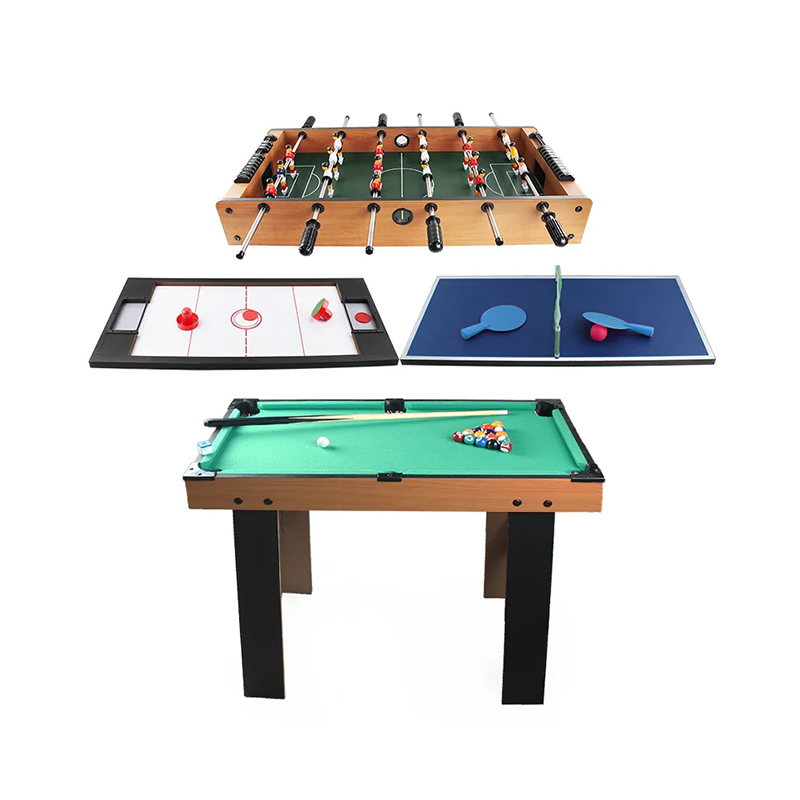
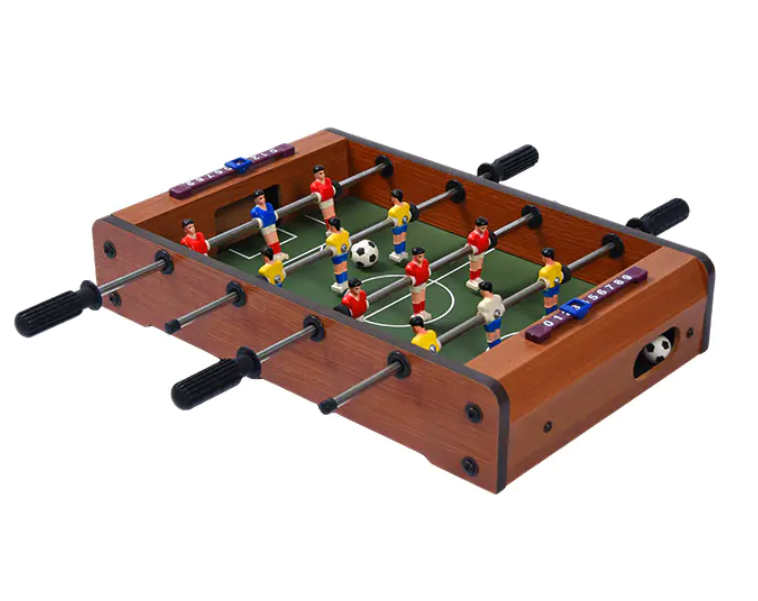
(1) Wooden Mini Foosball Table
This mini foosball table simulates a real soccer field, made of high-quality solid wood materials, with a compact design and simple operation. Players control the rotating rods on both sides to move the players, aiming to score goals in the opponent's net, experiencing a fast-paced and exciting game.
Key Features: Made of solid wood, durable and aesthetically pleasing; compact design, suitable for home and office use.
Applicable Scenarios: Family entertainment, office leisure, gatherings with friends. Competitive: Simple to operate but highly challenging, suitable for multi-player competition.
(2) Desktop Mini Bowling Game Set
This desktop mini bowling game set allows players to simulate a real bowling match on a tabletop. The set includes exquisite miniature bowling pins and balls, allowing players to knock down the targets by throwing the small balls, improving accuracy and power.
Key Features: Compact and portable, suitable for use in small spaces; provides a rich interactive experience.
Applicable Scenarios: Family entertainment, office, school.
Competitiveness: Combines skill and luck, suitable for players of all ages.
(3) Mini Air Hockey Desktop Set
The mini air hockey table uses an air dynamics system to make the small puck slide on the tabletop, simulating a real ice hockey game. Players control small pushers to hit the puck and score goals.
Key Features: Uses an air dynamics system for a realistic sliding experience; high-strength materials, durable and non-slip.
Applicable Scenarios: Family gatherings, friends' interactions, company team building.
Competitiveness: Requires fast reaction time and precise control.
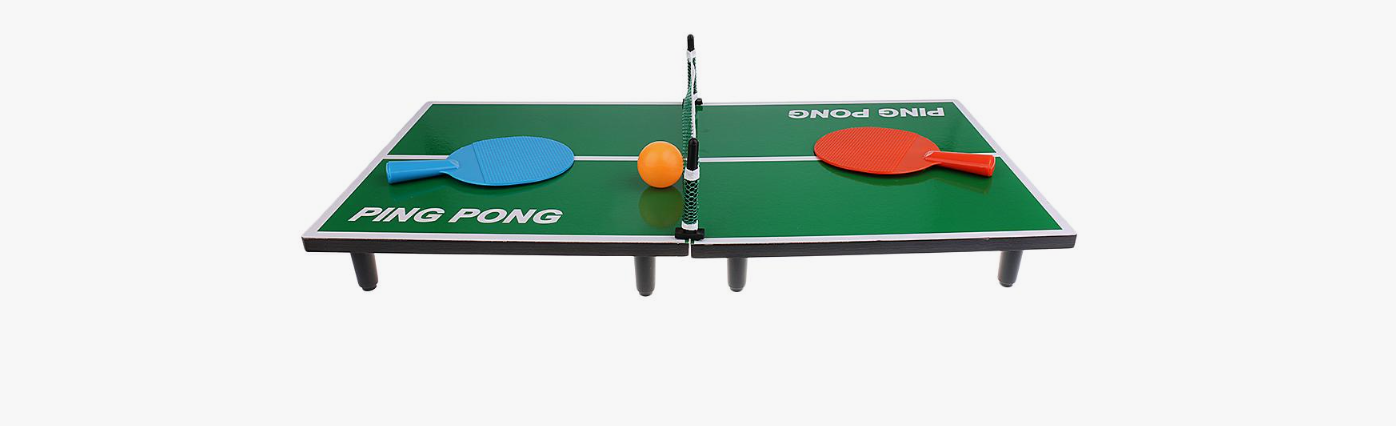
(4) Mini Desktop Table Tennis Set
This mini desktop table tennis set brings traditional table tennis to the tabletop, equipped with miniature rackets and balls, suitable for intense competition in small spaces. Players can play singles or doubles, enjoying a high-intensity competitive experience.
Key Features: Suitable for small spaces, providing the experience of traditional table tennis; suitable for multi-player interaction.
Applicable Scenarios: Family entertainment, office, school activities.
Competitiveness: Requires high reaction speed and accuracy, suitable for skill challenges.
(5) Classic Wooden Table Football
This classic wooden table football game is made of high-quality wood and features a classic design. It simulates a real football match, where players control the players by rotating the rods to hit the ball into the opponent's goal.
Key Features: Classic solid wood design, sturdy structure; improves reaction speed and coordination during gameplay.
Applicable Scenarios: Family gatherings, office leisure, team activities.
Competitiveness: Simple and easy to learn, but with a certain competitive challenge, suitable for multiple players.

Tabletop Games Comparison Chart:
| Product Name | Key Features | Applicable Scenarios | Competitiveness | Maintenance |
| Wooden Mini Football Table | Made of solid wood, sturdy structure, simple and easy to operate | Family entertainment, office, friend gatherings | Medium-High | Regularly clean the surface and accessories, avoid impacts |
| Desktop Mini Bowling Set | Exquisite small bowling pins and balls, compact and easy to store | Home, office, school activities | Medium | Clean the pins, check if the ball is damaged or worn |
| Mini Air Hockey Table Set | Air-powered system, smooth sliding ball, intense competitiveness | Family gatherings, office, team building | High | Check the air system, regularly clean the surface and balls |
| Mini Desktop Ping Pong Set | Mini design, suitable for small spaces, provides traditional ping pong experience | Family entertainment, office, school activities | Medium | Clean the surface, check the paddles and balls |
| Mini Desktop Air Hockey Table | Air-powered system, smooth sliding, ideal for family entertainment and parent-child interaction | Family, office, parent-child activities | High | Check the air system, clean the surface and balls regularly |
| Classic Wooden Table Football | High-quality solid wood, classic football gameplay, rotate rods control players | Family gatherings, office leisure, team activities | High | Regularly check the rods, keep the surface clean, avoid impacts |
| Mini Desktop Bowling Set | Compact design, easy to carry, suitable for small spaces, high-quality bowling pins and balls | Family entertainment, office, friend gatherings | Medium | Clean the pins and balls, check for cracks or damage |
3. Tabletop Game Maintenance Guide
The following are maintenance tips for wooden mini foosball tables, tabletop mini bowling game sets, mini air hockey tabletop sets, mini tabletop table tennis sets, mini tabletop air hockey tables, classic wooden table football, and mini tabletop bowling game sets. Proper maintenance and care will not only extend the lifespan of your game equipment but also ensure the best gaming experience every time you play.
(1) Maintenance Tips for Wooden Mini Foosball Tables
Cleaning the tabletop: Regularly wipe the tabletop with a clean, soft cloth. Avoid using strong acidic or alkaline cleaning agents to prevent damage to the wood surface. For stains, gently wipe with warm water.
Checking the rotating rods: Regularly check the flexibility and tightness of the rotating rods to ensure there is no looseness or jamming. Lubricate regularly with lubricating oil to prevent rust.
Preventing impact: Avoid excessive impact to prevent damage to the player rods or other parts.
Storage environment: Avoid exposing the tabletop to sunlight to prevent wood discoloration and cracking. Store in a dry, cool place to prevent moisture from causing the wood to expand or deform.
(2) Maintenance Tips for Tabletop Mini Bowling Game Sets
Cleaning the bowling pins and balls: Clean the bowling pins with a damp cloth, avoiding soaking them in water. Clean the balls with a mild detergent and ensure the surface is free of scratches.
Checking the bowling pins: Regularly check the integrity of the bowling pins for cracks or damage. Replace immediately if damage is found.
Storage: Bowling pins and balls should be stored in a dry place, avoiding high temperatures or humid environments. Avoid placing them in places where they are easily subject to impact or compression.
Ball maintenance: The surface of the bowling ball should avoid contact with sharp objects to prevent scratches. Clean the ball regularly to ensure its surface is smooth and undamaged.
(3) Maintenance Tips for Mini Air Hockey Tabletop Sets
Cleaning the tabletop and pucks: Clean the tabletop surface with a soft cloth and warm water, avoiding the use of chemical cleaning agents. Keep the air channels and gliding surface clean to ensure smooth airflow.
Checking the air power system: Regularly check that the air power system (such as the fan, air pipes, etc.) is working properly. Ensure the fan is free of dust accumulation and clean the fan regularly.
Check the slides and balls: Ensure the slides are free of dust or blockages, and keep the ball surfaces smooth. Regularly check the balls for cracks or wear.
Avoid overuse: Avoid prolonged, uninterrupted use and give the equipment adequate rest time to extend its lifespan.
(4) Maintenance points for Mini Desktop Table Tennis Set
Clean the tabletop: Regularly wipe the tabletop with a soft cloth to keep the table tennis table surface clean and tidy. Avoid using harsh cleaning agents to prevent damage to the tabletop coating.
Check the net and net posts: Regularly check that the net posts are stable and that the net is not loose or damaged. Adjust the height and tension of the net posts as needed.
Maintain the table tennis rackets and balls: Clean the table tennis rackets regularly to keep the racket surfaces clean. Table tennis balls should be stored in a dry place to prevent deformation due to moisture.
Storage: When not in use, store the desktop table tennis table in a dry, cool place. Avoid exposing the tabletop to direct sunlight to prevent the surface paint from fading.
(5) Maintenance points for Mini Desktop Air Hockey Table
Clean the tabletop and pucks: Similarly, wipe the tabletop with a soft cloth to keep the surface smooth and dust-free. When cleaning the pucks, ensure their surfaces are undamaged.
Check the air system: Regularly check that the air system is working properly and that air circulation is smooth. If insufficient airflow is detected, clean the fan and ducts promptly.
Storage: When not in use, the air hockey table should be stored in a dry and well-ventilated place. Avoid humid environments to prevent damage to internal parts of the equipment.
Check equipment connections: Ensure electrical connections are safe and secure, and avoid excessive pulling on cables or sockets.
(6) Maintenance points for Classic Wooden Table Football
Clean the tabletop and player rods: Wipe the tabletop and player rods with a damp cloth to ensure they are free of dust and stains. Pay special attention to cleaning the bearings of the rotating rods to prevent dust accumulation.
Check the rotating rods and bearings: Regularly check the lubrication of the rotating rods and bearings to ensure smooth rotation. If there is any sticking, use a suitable amount of lubricating oil.
Check player positions: Check the fixed state of the players to ensure they are not loose or detached. Avoid forcefully impacting the player rods to prevent structural loosening.
Storage: When not in use, the wooden table football game should be stored in a dry, cool place, away from direct sunlight or moisture to prevent damage to the wood.
(7) Maintenance Tips for Mini Tabletop Bowling Game Set
Cleaning of bowling pins and balls: Regularly wipe the bowling pins and balls with a damp cloth to keep the surface smooth and clean. Avoid using strong chemical cleaners.
Checking the pins: Regularly check the bowling pins for cracks or damage. Ensure the pins are not loose or wobbly.
Ball maintenance: Avoid hitting the bowling balls against hard objects to prevent cracks or wear on the surface. Clean the balls regularly to ensure their surface is free of scratches.
Storage: Bowling pins and balls should be stored in a dry, well-ventilated place, away from high temperatures and humid environments.
Tabletop Game Maintenance Summary:
| Product Name | Maintenance Key Points | Cleaning Method | Inspection Items | Storage Recommendations |
| Wooden Mini Football Table | Regularly clean the surface, rotating rods, and player fixtures | Wipe with a soft cloth, avoid harsh cleaners | Check the tightness and lubrication of the rods | Avoid direct sunlight, store in a dry and cool place |
| Desktop Mini Bowling Set | Clean the bowling pins and balls, regularly check the condition of the pins and balls | Wipe the pins and balls with a damp cloth, avoid soaking | Inspect the pins for cracks or damage | Store in a dry place, avoid collisions |
| Mini Air Hockey Table Set | Regularly clean the surface and balls, check the air system and tracks | Clean the surface and tracks, check air flow | Check the fan, air pipes, and balls | Store in a well-ventilated area, avoid humidity |
| Mini Desktop Ping Pong Set | Clean the surface and paddles, check the net frame for stability | Wipe the surface and paddles with a damp cloth | Check the stability of the net frame and paddles | Store in a dry, cool place |
| Mini Desktop Air Hockey Table | Regularly clean the surface and balls, check the air power system | Clean the surface and balls | Inspect the air system, fan, and pipes | Avoid humidity and direct sunlight |
| Classic Wooden Table Football | Clean the surface, rotating rods, and player positions, check lubrication regularly | Wipe with a soft cloth, check lubrication of the rods | Check the stability and lubrication of the rotating rods | Store in a dry, cool place, avoid strong impacts |
| Mini Desktop Bowling Set | Regularly clean the pins and balls, check for cracks or damage | Clean the pins and balls, avoid harsh chemicals | Inspect the integrity of the bowling pins | Store in a dry, well-ventilated place |
4. Are Board Games Suitable for Family Activities?
In modern society, communication and interaction among family members have become especially important. With the widespread use of electronic devices and social media, family members often lack face-to-face interaction due to their busy lives, especially between parents and children. However, parent-child interaction is crucial for a child's growth and the development of family relationships. So, how can we find an activity that is both fun and promotes parent-child communication in our busy daily lives? Board games, as a form of entertainment suitable for all ages, are slowly becoming one of the preferred choices for family activities.
(1) Board Games: A New Way for Parent-Child Interaction
Board games, as the name suggests, are games played on a tabletop, usually involving props such as boards, cards, dice, and balls. They are not only a form of entertainment but also a medium for interaction. By participating in games together, parents and children can engage in in-depth communication and collaboration in a relaxed and enjoyable atmosphere, building closer parent-child relationships.
Promoting Communication and Understanding
Board games provide a platform for family members to share and communicate, especially between parents and children. Through games, parents can better understand their children's thinking patterns, interests, and emotional expressions. Children can also understand their parents' thoughts and feelings through their reactions and words. This two-way interaction promotes understanding and rapport among family members.
Cultivating Teamwork Spirit
Many board games require collaboration among family members to complete tasks or achieve goals. This cooperation not only helps children develop teamwork skills but also allows parents to experience the joy of working together and growing with their children. The shared goals in the game can help family members overcome competition and conflict, and enhance cooperation and empathy.
Strengthening Parent-Child Relationships
The highly interactive and fun nature of games makes it easier for parents and children to build good parent-child relationships in a relaxed state. Especially during a child's growth, parental companionship and encouragement can greatly enhance a child's self-confidence and emotional security. Through games, parents can not only become their children's "teammates" but also participate in their children's world in a relaxed and enjoyable way.
(2) The Educational Value of Board Games
Board games are not just for entertainment; they also contain rich educational value. Many board games, through clever design, incorporate knowledge from subjects such as mathematics, logic, strategy, and language, helping children learn and grow subtly through play. Enhancing Thinking Skills
Many board games, especially strategy and intellectual games such as chess, puzzles, and Sudoku, can exercise children's logical thinking, spatial imagination, and problem-solving skills. Children need to think carefully, analyze situations, and plan strategies while playing these games, thus cultivating their thinking and decision-making abilities.
Improving Manual Dexterity and Coordination
Some board games involve fine motor skills, such as table mini-football, table bowling, and mini-table tennis. These games not only allow children to exercise fine hand movements and coordination while playing, but also promote their development in spatial awareness, positional perception, and reaction abilities.
Stimulating Creativity and Imagination
Some board games, such as puzzles and building games, can stimulate children's creativity and imagination. In these games, children can freely conceive, create, and combine according to the rules, fully utilizing their imagination. In addition, these games can cultivate children's patience and concentration, helping them gain a sense of accomplishment through continuous attempts.
(3) Recommended Board Games for Families
Choosing the right board games is crucial for families. Here are some recommended board games suitable for parent-child interaction, providing families with both fun and educational entertainment experiences.
Wooden Mini Foosball Table
This classic table football game features a wooden structure, is easy to operate, and is suitable for competitive play among family members. Parents can interact with their children to stimulate their interest in sports and simultaneously exercise their hand-eye coordination and reaction speed.
Desktop Mini Bowling Game Set
The desktop mini bowling game set is a game suitable for family entertainment. It's easy to play and suitable for children and adults of all ages. In the game, players need to knock down bowling pins with a small ball, which not only exercises children's fine motor skills but also strengthens parent-child relationships through interaction.
Mini Desktop Table Tennis Set
This mini table tennis table is perfect for family gatherings. The rules are simple, and the gameplay is exciting. Through competition among family members, children can not only improve their reaction abilities and hand-eye coordination but also deepen their relationship with their parents in a relaxed and enjoyable atmosphere.
Classic Wooden Table Football
The classic wooden table football is another board game suitable for family entertainment, with simple yet challenging gameplay. During gameplay, parents and children can enhance interaction through cooperation and competition, fostering teamwork in children.
Puzzles and Construction Games
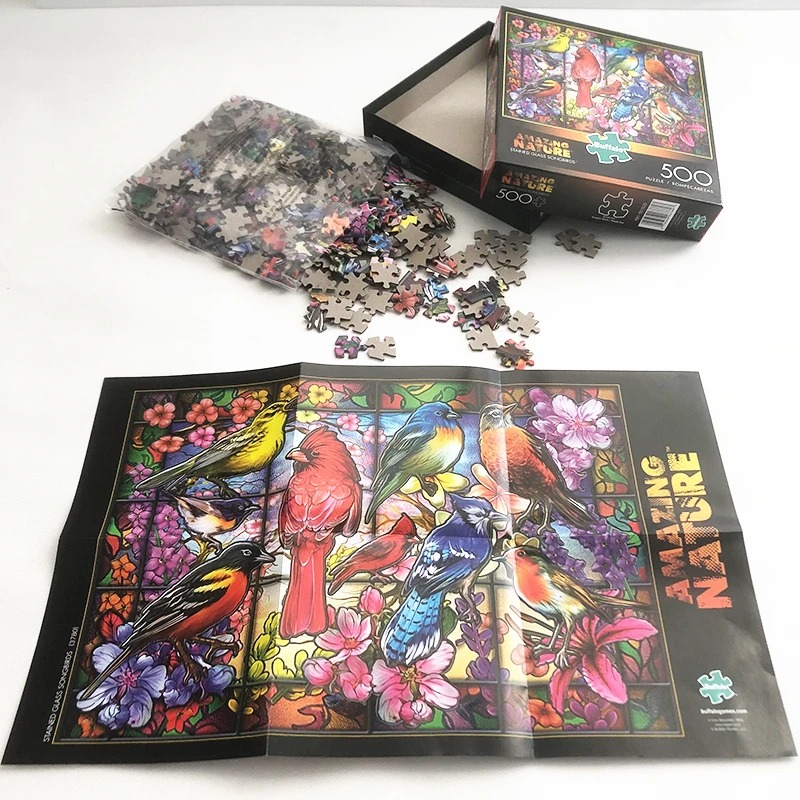
Puzzle games and construction games (such as LEGO) can cultivate children's spatial thinking, hands-on abilities, and creativity. Parents can work with their children to complete puzzles or construction tasks together, which not only strengthens parent-child relationships but also stimulates children's imagination and problem-solving skills.
(4) How to choose suitable board games for the family?
When choosing board games, parents need to consider their child's interests, age, and the educational value of the game. Here are some suggestions for choosing board games:
Choose age-appropriate games: Different types of games are suitable for children of different ages. For younger children, choose games with simple operations and clear rules, while for older children, you can choose games with stronger strategic elements and more complex rules.
Consider the interests of family members: When choosing games, consider the interests and hobbies of family members. If family members enjoy sports games, you can choose table football, table tennis, etc.; if they prefer intellectual games, you can choose puzzles, board games, etc.
Focus on the balance between educational value and fun: The chosen board game should be both fun and educational, helping children develop key abilities such as logical thinking and creativity.
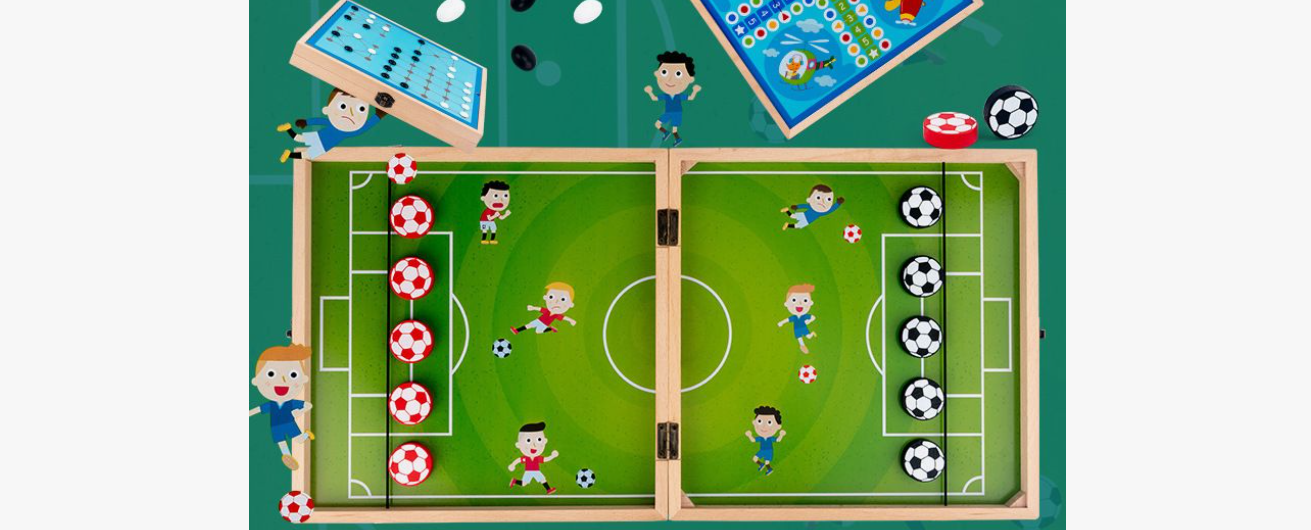
5. Frequently Asked Questions about Board Games
Q1. What are board games?
Board games are recreational activities played on a tabletop, usually involving components such as boards, cards, dice, and pieces. Players sit around a table and interact according to specific rules. There are many types of board games, including strategy games, cooperative games, competitive games, and party games.
Q2. What age groups are suitable for board games?
Board games are suitable for all ages, from children to adults. For children, there are many board games on the market with simple designs and intuitive rules, such as puzzles and classic board games (e.g., checkers, chess). Many board games have age recommendations, and parents can choose suitable games based on their child's age and interests.
Q3. What are the benefits of playing board games as a family?
Strengthening parent-child relationships: Board games provide an opportunity for parent-child interaction. Parents and children communicate and cooperate during the game, enhancing mutual understanding and affection.
Cultivating teamwork: Many board games require players to collaborate to achieve goals, helping children learn to contribute to a team and share responsibility.
Improving thinking skills: Strategy games can help children develop logical thinking, spatial reasoning, and problem-solving abilities.
Developing social skills: Through board games, children can learn social skills such as taking turns, respecting others, and handling winning and losing.
Q4. How to choose a board game?
When choosing a board game, consider the following factors to help you make the best choice:
Number of players: Choose a game suitable for the number of people in your family or group of friends.
Game difficulty: Choose a game difficulty level appropriate for the age and experience of the participants. For young children, choose games with simple rules and intuitive gameplay; for adults, you can choose more complex and challenging games.
Game duration: Choose a game with a suitable duration based on your time availability. If you have limited time, choose games that can be completed quickly; if you have ample time, you can choose longer strategy games.
Interests and preferences: Choose a game type that your family members or friends enjoy, such as strategy, cooperative, party, or action games.
Q5. Can board games promote children's learning?
Yes, many board games are not only fun but also highly educational. Through games, children unconsciously develop the following skills:
Logical thinking and problem-solving: Strategy and reasoning games can help children train their analytical, judgment, and problem-solving abilities. Memory and Concentration: Some memory-based or rule-following games can improve children's memory and concentration.
Mathematical Skills: Certain board games require mathematical calculations (such as dice games, card games, etc.), helping children improve their math skills while playing.
Language Skills: Some board games emphasize language expression, vocabulary building, and communication skills, especially word games and question-and-answer games.
Q6. How to clean and maintain board games?
Cleaning and maintaining board games is very important, especially for wooden or intricately designed games. Here are some common maintenance methods:
Cleaning the board and cards: Gently wipe with a clean, soft cloth, avoiding wet cloths or chemical cleaners. For cards, use dedicated card sleeves to protect them from wear and tear.
Maintaining wooden games: Wooden game surfaces should be protected from direct sunlight and humid environments to prevent warping or cracking. Special wood care oil can be used to maintain wooden parts.
Storage: All game components should be stored in a dry, cool place, avoiding high temperatures or humid environments that can affect the quality of the game.
Regular inspection: Especially for games with moving parts (such as rotating rods, springs, airflow systems, etc.), regularly check the operating condition of these parts to ensure smooth operation.
Q7. Can all board games be played by multiple people?
Most board games support multiplayer gameplay, especially for family gatherings and friend get-togethers.
However, some games are designed for single players or a small number of participants, so you need to check the number of players required when choosing a game.
Q8. How to play board games to improve competitiveness?
If you want to achieve a higher level of competitiveness in board games, you can try the following methods:
Understand the rules and strategies: Carefully learn the game rules and understand the strategies and winning conditions. Many board games have their own game strategies; familiarity with these strategies can help you make wiser decisions.
Practice and reflection: Improve your skills and reaction abilities through continuous practice. After each game, you can discuss with your opponents and reflect on your strengths and weaknesses.
Analyze your opponents: Understand your opponents' playing style and habits, and adjust your strategy based on their behavior to increase your chances of winning.
Q9. Do board games help with socialization?
Yes, board games are a very good social tool. In games, players need to communicate, collaborate, or compete with each other, which effectively breaks down barriers and increases interaction and communication between people. Whether it's a family gathering, a get-together with friends, or a social event, board games can serve as an excellent bridge to foster interpersonal relationships.

A professional enterprise specializing in the production of game gift products, with complete testing equipment and strong technical force.
Read MoreCONTACT US
For exclusive deals and latest offers, sign up by entering your email address below.
ORGANAIZATION INFO
Address: No. 329, Fangyan Road, Luotuo Street, Zhenhai District, Ningbo City, Zhejiang Province, China.
Phone:+86 15990507778
E-mail:[email protected]
Copyright © Ningbo Royal Import And Export Co., Ltd. All Rights Reserved.
China Entertainment Game Gift Sets Manufacturers Wholesale SEntertainment Game Gift Sets


 English
 Español
 Deutsch